
Swing Gate vs Sliding Gate – Which Is Right?
A gate should do more than mark the entrance to your property. It needs to control access, work reliably through Minnesota weather, and match the way vehicles and people move in and out every day. When weighing a swing gate vs sliding gate, the best choice usually comes down to available space, site conditions, security needs, and the type of operation you want.
For a residential driveway, a swing gate may deliver the classic look that complements an ornamental, wood, or vinyl fence. For a busy commercial entrance or industrial yard, a sliding gate can provide dependable access control without taking up valuable driveway space. Both can be attractive, secure, and automated when designed and installed for the property.
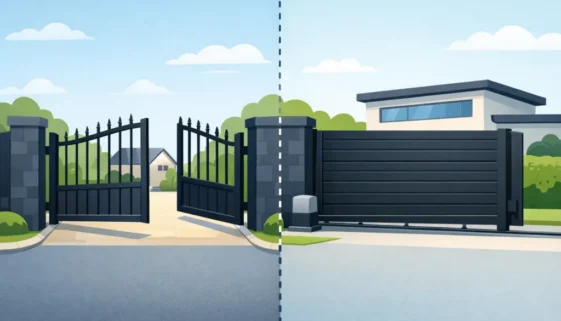
Swing Gate vs Sliding Gate: The Main Difference
A swing gate opens inward or outward on hinges, much like a door. It may have one leaf or two leaves that meet in the middle. A sliding gate travels sideways along the fence line, either on a ground track or through a cantilever system that carries the gate above the ground.
That operating difference affects nearly every part of the project. Swing gates need clear space inside or outside the entrance for the leaves to open. Sliding gates need a clear run of fence line beside the opening, generally long enough to accommodate the full gate when it is open.
Neither style is automatically better. A well-planned gate is one that fits the property rather than forcing the property to fit the gate.
When a Swing Gate Makes Sense
Swing gates are a strong choice for homes, private driveways, and properties where appearance matters as much as access control. They create a defined entrance and can be designed to coordinate closely with the fence, landscaping, architecture, and driveway layout.
A single swing gate works well for narrower openings, pedestrian access, or service entrances. A double swing gate is often used for wider residential driveways, where two equal or unequal leaves can create a balanced, welcoming look. Ornamental aluminum or steel-style gates are especially popular when homeowners want a visible entrance without closing off the view of the property.
Swing gates can also be practical when there is little room beside the fence line for a sliding gate to travel. If the driveway has a suitable level apron and enough clear space for the leaves to open, the installation can be straightforward.
Benefits of swing gates
The visual flexibility is a major advantage. Swing gates can be simple and functional or more decorative, with arched tops, finials, custom patterns, and materials selected to match the surrounding fence. They also do not require a long storage area along one side of the entrance.
For many residential properties, swing gates provide a more traditional appearance than a sliding gate. They can create a strong first impression while improving privacy, keeping children and pets within the property, and discouraging unwanted vehicle access.
Limitations to consider
The driveway must provide room for the gate leaves to move freely. A swing gate should not open into a public sidewalk, street, or area where it could block vehicles. Sloped driveways also require careful planning. A gate leaf that swings across an incline may scrape the pavement or leave an awkward gap beneath the gate.
Snow is another Twin Cities consideration. Snow accumulation in the swing path can prevent the gate from opening fully or place extra strain on an operator. This does not rule out swing gates, but it does mean the driveway approach, drainage, snow-removal routine, and operator selection deserve attention before installation.
When a Sliding Gate Is the Better Choice
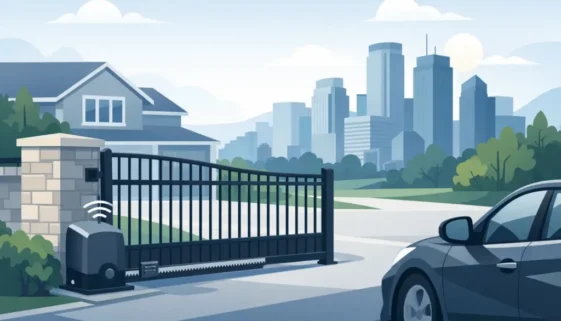
Sliding gates are often the preferred option for commercial properties, industrial sites, apartment communities, storage facilities, and wider driveways. Since the gate moves parallel to the fence, it does not need a large clear swing area inside the entrance.
This makes a sliding gate particularly useful where vehicles pull close to the gate, where a driveway slopes near the entrance, or where the property needs a wider opening for deliveries, trailers, work vehicles, or equipment. A sliding gate can also support controlled access at high-traffic locations where opening and closing cycles happen frequently.
Benefits of sliding gates
A sliding gate is an efficient solution when security and site control are priorities. It can secure a broad opening while keeping the driveway clear once open. For commercial and industrial properties, this is valuable when truck traffic, employee parking, visitor access, and delivery schedules all compete for space.
Cantilever sliding gates are especially well suited to cold-weather areas because they do not roll on a ground track across the driveway. The gate is supported above the drive surface, reducing the risk of debris, ice, and snow interfering with its travel. Track gates can also perform well, but the track needs regular attention to stay clear and level.
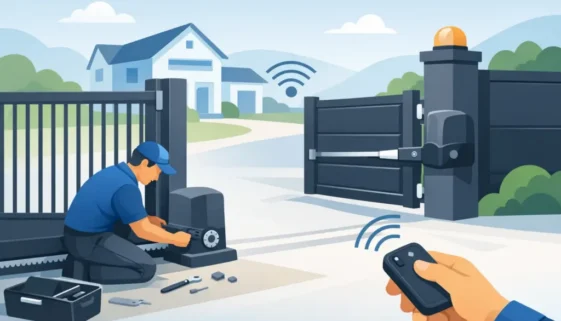
Sliding gates work naturally with automated access systems. Keypads, remote controls, card readers, telephone entry systems, and other access-control options can be matched to the needs of the site. The right operator should be selected for the gate’s size, weight, expected daily cycles, and exposure to weather.
Limitations to consider
The primary requirement is side room. A sliding gate needs enough clear fence line beside the opening to store the gate in its fully open position. A 20-foot opening, for example, may require more than 20 feet of clear space depending on the gate style and support system.
Sliding gates can also involve more structural planning than a simple swing gate. Posts, footings, rollers or cantilever hardware, gate frame construction, and operator placement all need to be installed precisely. That preparation is worthwhile when the property calls for a long-lasting, high-use access solution.
Consider Your Driveway, Grade, and Winter Conditions
The shape of the site often decides the question faster than preference alone. A level driveway with generous interior space may be ideal for a swing gate. A sloped entrance, tight parking area, or wide commercial access point may point toward a sliding gate instead.
Minnesota winters should be part of the decision from the beginning. A gate system has to work after snowfalls, freeze-thaw cycles, and months of road salt and moisture. Proper drainage, stable footings, durable hardware, and adequate ground clearance all affect long-term performance.
For swing gates, plan where plowed snow will go so it does not build up in the opening path. For sliding gates, ensure the travel area remains clear and that the system is designed for the conditions it will face. An experienced installer can identify issues such as poor grade, limited runback, drainage concerns, or a gate location that interferes with normal traffic patterns before the project begins.
Security, Privacy, and Curb Appeal
Gate design should support the level of security the property actually needs. A residential gate may primarily keep pets and children safely contained while adding privacy and curb appeal. A commercial or industrial gate may need to control employee access, protect inventory, limit after-hours entry, and establish a clear perimeter.
The gate style and fence material should work together. Chain-link fencing with privacy slats can create a practical secured enclosure. Ornamental fencing can provide a polished, professional entrance while maintaining visibility. Wood and vinyl gates can complement residential privacy fences, although larger gate leaves require careful construction to prevent sagging over time.
Automation adds convenience, but it should never replace sound gate design. A properly sized frame, quality hinges or slide hardware, strong posts, and correctly installed operator are the foundation of a dependable gate system.
Choosing the Right Gate Operator
Both swing and sliding gates can be automated, but the operator must be matched to the application. Gate weight, opening width, material, wind exposure, expected traffic volume, and available power all matter. A light-duty residential operator is not the right fit for a busy commercial entrance that cycles throughout the day.
Safety devices are equally important. Photo eyes, obstruction detection, emergency release features, and properly placed controls help protect people, vehicles, and the gate itself. The operator should also be positioned to allow for service access and dependable operation through changing weather.
Boulevard Fence helps Twin Cities property owners evaluate gate layout, fencing materials, access needs, and automation options as part of one coordinated project. The result is a gate system designed for how the property is actually used, not a one-size-fits-all installation.
The right gate becomes easier to choose once the site is measured and the daily traffic pattern is clear. A professional on-site assessment can turn a difficult choice into a practical plan that protects your property, complements its appearance, and performs reliably for years.