

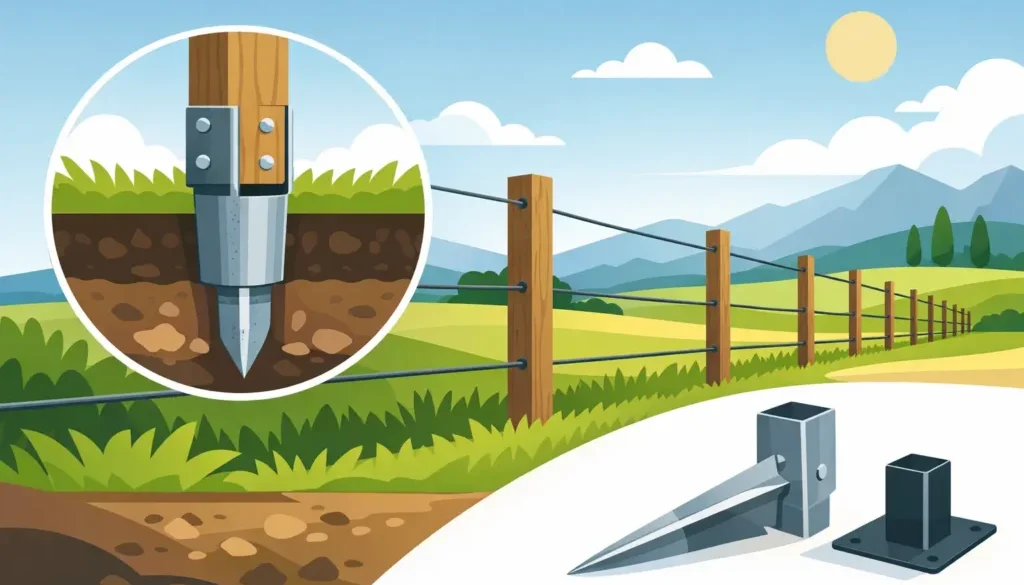
A fence can look straight and finished on installation day, then begin to lean after its first Minnesota winter if the posts were not properly supported. Fence post anchors can be a smart solution for certain projects, especially when speed, clean installation, or existing concrete are part of the equation. But an anchor is not automatically a replacement for a properly sized concrete footing.
The right support system depends on the fence material, height, soil conditions, wind exposure, gate loads, and the demands placed on the fence over time. For Twin Cities property owners, frost movement is also a major consideration. Choosing the right foundation for each post protects the appearance, security, and service life of the entire fence line.
What Are Fence Post Anchors?
Fence post anchors are hardware systems that secure a fence post to the ground or an existing hard surface. Rather than setting every post directly in a hole with concrete, an anchor may be driven, screwed, bolted, or embedded into place. The post is then fastened to a metal bracket, sleeve, or base.
These systems come in several forms. Driven spike anchors are installed into soil and typically include a sleeve that holds a wood post. Screw-in ground anchors use a helical shaft to gain holding power below the surface. Surface-mount post bases fasten to a concrete slab, retaining wall, or other approved masonry surface. Some heavy-duty anchors are engineered for specific structural loads and soil conditions.
The appeal is easy to understand. Anchors can reduce digging, limit concrete work, and make it easier to replace a damaged wood post without tearing out an entire footing. In the right location, they can provide a clean, efficient installation. Their limitations matter just as much, however.
When Fence Post Anchors Make Sense
Anchors are often a good fit for smaller, lower-load fencing applications. A short decorative garden border, a light privacy screen in a protected area, or a temporary construction enclosure may not require the same foundation design as a six-foot privacy fence around an open backyard.
Surface-mounted anchors are also useful where a fence must begin on existing concrete. A commercial property may need a short enclosure on a concrete pad, for example, or a homeowner may want a railing-style fence section along a patio. If the concrete is thick enough, sound, and properly reinforced for the intended load, a rated post base can create a secure attachment point without cutting into the slab.
Anchors can also be practical when digging is difficult or undesirable. Areas near utilities, landscaping, irrigation systems, tree roots, pavers, and finished hardscapes may call for a different approach than standard post-hole excavation. A professional site review helps identify what is below grade and whether an anchor is appropriate.
For some property owners, post replacement is another advantage. When a wood post is secured in a compatible metal anchor, the post may be removed and replaced with less disruption than a post buried in concrete. That can be valuable when maintaining a small fence section or repairing localized damage.
Where Anchors Need Extra Caution
A fence is more than a row of individual posts. It acts as a connected system that catches wind, resists impact, supports gates, and moves with seasonal ground conditions. The heavier the fence and the more force it must resist, the more critical the foundation becomes.
Tall solid-panel privacy fences create substantial wind load. A six-foot wood or vinyl fence can behave like a sail during a strong storm, particularly along an exposed lot line. Lightweight ground spikes may not provide enough resistance to keep posts plumb under repeated wind pressure. Even if the rails and panels are high quality, weak post support can shorten the life of the whole installation.
Frost is another concern throughout Minneapolis, St. Paul, and surrounding communities. Soil expands and shifts as it freezes and thaws. Shallow anchors can move with that soil, creating uneven fence lines, loose connections, and gates that no longer align properly. A deeper, properly designed footing may be the better long-term choice for permanent fencing in frost-prone conditions.
Gate posts deserve special attention. A walk gate, double-drive gate, or automated gate places repeated side loads and twisting forces on its supporting posts. These are not locations to treat as standard line posts. Gate systems need foundations designed for the gate’s size, weight, hardware, and daily use. For larger access-control projects, the fence, gate, operator, and support structure must work together from the start.
Ground Anchors vs. Concrete Footings
The best option is not always the fastest option. Ground anchors may reduce installation time, but concrete footings generally provide greater stability for many permanent residential, commercial, and industrial fence projects.
A concrete-set post is installed in an excavated hole sized for the fence design and local conditions. The post is positioned carefully, held plumb, and supported by concrete that helps resist lateral movement. For a substantial wood privacy fence, ornamental fence, chain-link perimeter, or gate post, this approach often delivers the strength needed for dependable performance.
That does not mean concrete is required everywhere. Installing concrete for a simple, low-load fence where an engineered anchor would perform well can add cost and disruption without producing a meaningful benefit. On the other hand, choosing a basic anchor for a tall privacy fence simply to avoid digging can create an expensive repair problem later.
The decision should be based on the entire project, not on one product feature. Fence height, panel style, post spacing, soil type, drainage, property exposure, and planned use all affect the right recommendation.
Choosing the Right Anchor for the Application
If an anchor is appropriate, it should match the fence material and expected load. A wood post anchor must accommodate the actual post dimensions, not just the nominal size. It should also elevate the bottom of the wood post above soil or standing water when possible. Keeping wood out of constant ground moisture can help reduce rot.
For surface-mount systems, the condition of the concrete is just as important as the bracket. Cracked, thin, deteriorated, or poorly supported concrete may not hold the required fasteners. The edge distance of the anchor, the depth of fasteners, and the thickness of the slab all affect performance. A sturdy-looking base plate cannot compensate for an unsuitable slab.
For driven or helical ground anchors, soil is the deciding factor. Dense clay, loose fill, sandy soil, and rocky ground do not provide the same holding capacity. Installation depth and anchor design matter, and an anchor that installs easily is not necessarily an anchor that can support a high-load fence.
Commercial and industrial sites may require an even more careful approach. Security fencing, dumpster enclosures, loading-area barriers, and access-control gates often face vehicle activity, high traffic, and greater security demands. These projects benefit from a coordinated design that considers the full perimeter rather than treating posts as isolated components.
Installation Details That Protect Fence Performance
Proper alignment is essential whether posts are anchored or set in concrete. A fence line should be laid out carefully so posts are straight, level where required, and positioned for consistent panel spacing. Small errors at the post stage become much more visible once rails, pickets, chain link fabric, or ornamental panels are installed.
Fasteners also matter. Exterior-rated hardware helps resist corrosion from rain, snow, salt, and seasonal moisture. Using the wrong screw, bolt, or anchor fastener can compromise a quality bracket. Connections should be tightened correctly and inspected before the fence sections are installed.
Drainage should not be overlooked. Water that collects around the base of posts can accelerate wear, soften surrounding soil, and contribute to frost-related movement. Grading, downspout placement, and landscaping changes can all affect fence stability over time.
For homeowners, a professional installation also reduces the risk of placing posts where they interfere with underground utilities or property features. For commercial properties, it supports a cleaner schedule and fewer surprises during construction.
Start With the Fence, Not the Anchor
Fence post anchors are a useful tool, but they are only one part of a successful fence installation. The best foundation method starts with the fence’s purpose: privacy, security, pet containment, property definition, access control, or curb appeal. From there, the post support can be selected to match the real demands of the project.
Boulevard Fence helps Twin Cities homeowners, property managers, and businesses choose fencing solutions built for their site and intended use. A thoughtful estimate can identify when an anchor is practical, when a concrete footing is the better investment, and how to create a fence line that stays attractive and dependable through changing seasons.
A well-built fence earns its value quietly – by standing straight, operating smoothly, and continuing to protect the property long after installation is complete.


