
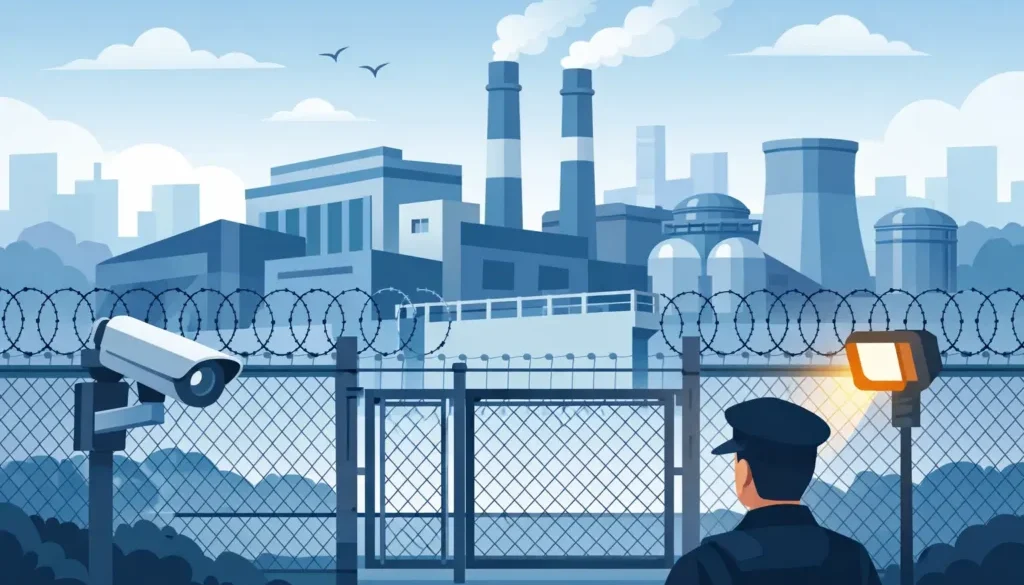
A factory perimeter has a demanding job. It must discourage unauthorized entry, define where visitors and deliveries belong, protect valuable equipment, and stand up to years of weather, traffic, and daily operations. The right factory security fencing is not simply a boundary line. It is a working part of your facility’s security and access-control plan.
For industrial operators in the Twin Cities, fence selection also has to account for snow, freeze-thaw cycles, wind, and the wear that comes with an active site. A fence that looks acceptable on installation day but cannot handle those conditions can quickly become a maintenance issue and a security concern.
What Factory Security Fencing Needs to Do
A factory fence should create a clear physical and visual boundary around the property. That boundary helps employees, vendors, truck drivers, and visitors understand where they can enter and where access is restricted. It also makes suspicious activity easier to identify because people outside the approved entry points are immediately noticeable.
The best design depends on what the facility needs to protect. A manufacturing plant with outdoor raw materials may need a tall, highly durable perimeter enclosure. A warehouse with regular freight traffic may need security fencing that directs vehicles toward a controlled gate. A smaller fabrication shop may need a practical enclosure around loading areas, storage yards, and mechanical equipment.
Security is only one part of the decision. The fence also needs to support safe operations. Emergency access, fire lanes, utility locations, loading patterns, drainage, and snow storage all affect the final layout. A professional site review helps identify these details before installation begins, when adjustments are far more efficient and less costly.
Choose the Right Material for the Risk Level
Commercial chain-link fencing is a common choice for factory properties because it offers dependable containment, visibility, and long-term value. Galvanized chain link is built for demanding use, while vinyl-coated options can provide a cleaner finished appearance and added protection from the elements. For many industrial sites, chain link delivers the most practical balance of strength, cost, and maintainability.
Fence height, mesh gauge, post size, and rail configuration matter as much as the material itself. A light-duty enclosure may work around a small equipment area, but it is not the right solution for a main facility perimeter. Taller fencing, heavier-gauge fabric, properly sized posts, and secure top rails provide better resistance to climbing, cutting, impact, and long-term movement.
Ornamental steel fencing can be a strong option where appearance matters alongside security. It is often used at office-facing areas, employee entrances, and visible street frontages where a professional presentation is part of the property standard. It can also work well when a facility needs visibility through the fence without the appearance of an industrial chain-link perimeter.
In some cases, one material is not enough for the whole site. A factory may use ornamental fencing at the main entrance, heavy commercial chain link around storage areas, and specialized gates at vehicle access points. This approach can direct investment where it provides the most value rather than treating every side of the property the same.
Height and Top Treatments Matter
Fence height should reflect the risk level, local requirements, and the area being enclosed. A short fence may define a boundary but offer limited deterrence. A taller perimeter makes unauthorized entry more difficult and reinforces that the property is controlled.
Top treatments can add another layer of protection. Depending on the project, this may include extended-height fabric, angled extensions, or other anti-climb measures. These choices should be made carefully. The right top treatment depends on security needs, surrounding properties, visibility concerns, and applicable codes. A qualified fencing contractor can help align the design with the realities of the site rather than recommending a one-size-fits-all solution.
Gates Are the Control Point That Matters Most
A secure fence has limited value if the gates are undersized, poorly placed, or left open throughout the day. Vehicle and pedestrian gates are where access is managed, which makes their operation central to the entire security plan.
Factories often need separate access for employees, visitors, deliveries, service providers, and emergency personnel. A dedicated pedestrian gate can keep foot traffic out of truck lanes. A properly sized sliding or swing gate can accommodate semitrailers without forcing drivers to make difficult turns near the entrance. The location of each opening should support efficient traffic flow while preventing vehicles from entering unrestricted areas.
Automated gate operators provide another level of control for facilities that need scheduled access, credentialed entry, keypad codes, remote operation, or monitored gate activity. The right operator must be matched to the gate type, gate weight, usage frequency, and site conditions. A gate that cycles repeatedly throughout the day requires different equipment than one used only for occasional deliveries.
Safety cannot be treated as an add-on. Gate systems should be designed with proper safety devices, clear operating zones, and reliable hardware. Preventive maintenance is also essential. A damaged hinge, misaligned track, failing operator, or compromised latch can create downtime and weaken site security when it is needed most.
Plan for Weak Points Around the Perimeter
Most factory security problems do not happen at the strongest part of the fence. They happen at overlooked gaps, damaged sections, unused gates, and areas with poor visibility. During planning, look closely at loading docks, dumpster enclosures, utility yards, rail-adjacent areas, retaining walls, and places where the grade changes sharply.
A fence must follow the terrain closely enough to avoid gaps beneath the fabric or panels. On uneven ground, the installation method may need to change to maintain a secure line. Drainage also deserves attention. Standing water around posts can contribute to soil movement and shorten the useful life of the installation.
Lighting and sightlines work alongside fencing. A clearly visible perimeter allows employees and security personnel to observe activity around the property. Landscaping should not create hiding areas near gates, corners, or pedestrian access points. Cameras, signage, and access-control systems can strengthen the overall plan, but they are most effective when the fence and gates already provide a well-defined physical barrier.
Build for Minnesota Weather and Daily Use
Factory security fencing in Minneapolis, St. Paul, and the surrounding area must tolerate changing seasons. Frost movement, snow accumulation, road salt, high winds, and repeated freeze-thaw conditions can affect posts, gates, and hardware. Installation quality is especially important because proper post placement and durable materials help the fence remain stable over time.
Winter operations should be considered before the fence layout is finalized. Snowplows need enough room to work without striking fence lines or gates. Sliding gates need a clear path that can be maintained during snow events. If snow is regularly piled against a perimeter fence, the design may need additional protection or a revised snow-storage plan.
Daily use creates another kind of wear. Forklifts, delivery vehicles, maintenance crews, and contractors can all put pressure on fencing near active work zones. Protective bollards or adjusted setbacks may be worthwhile near gates, corners, and equipment enclosures where vehicle contact is more likely. These details can prevent a single accidental impact from becoming an open breach in the perimeter.
Work With a Contractor Who Understands the Whole Site
An effective industrial fence project starts with more than measuring the property line. It starts with understanding how the site operates: where people enter, how freight moves, what assets need protection, and which areas need different levels of access.
Boulevard Fence provides commercial and industrial fencing solutions built around those real operating needs. From durable chain-link perimeter fencing to ornamental sections, gates, and gate operators, the goal is a system that protects the property without creating unnecessary friction for employees, deliveries, or visitors.
Before moving forward, walk the site with the fence plan in hand. Think through the first delivery on a snowy morning, the contractor arriving after hours, the employee using a pedestrian entrance, and the equipment that cannot be left exposed. A factory fence performs best when it is designed for those everyday moments, not just the property line on a drawing.


