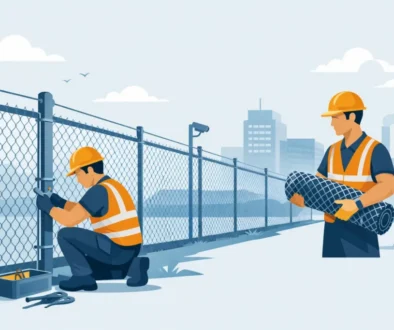
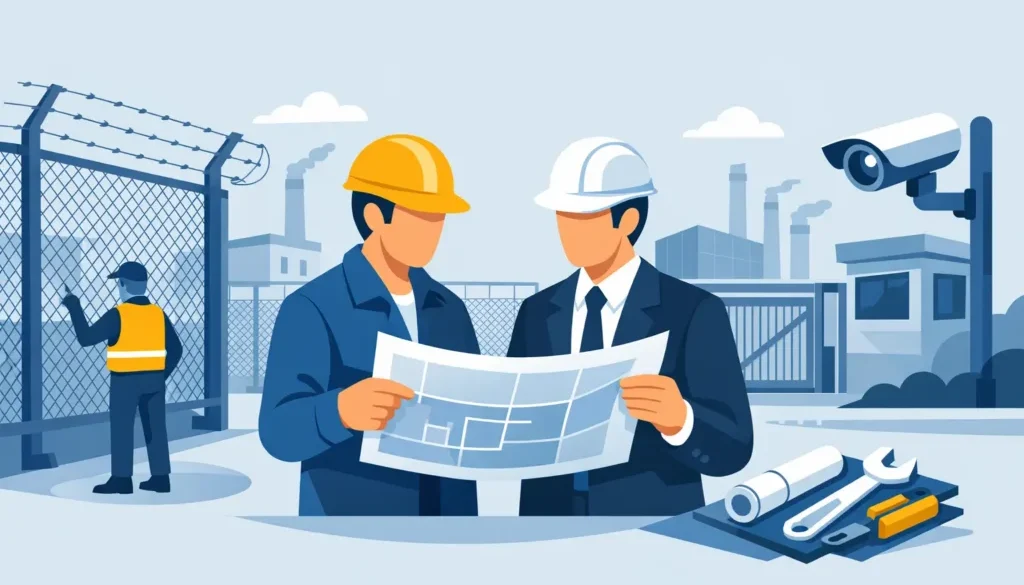
A fence around an industrial site has one job on paper – define the perimeter. In practice, it does much more. It helps control access, discourage theft and trespassing, protect equipment, guide vehicle flow, and support day-to-day operations without getting in the way. That is why choosing industrial security fencing contractors is not a small purchasing decision. It is a site protection decision that affects safety, uptime, and long-term maintenance costs.
Industrial fencing projects are different from a typical commercial enclosure. A warehouse yard, manufacturing facility, utility site, distribution center, and contractor storage lot may all need security fencing, but they do not need the same solution. The right contractor understands that the fence itself is only one part of the system. Gate placement, operator performance, material strength, site grading, visibility, and traffic patterns all matter just as much.
What industrial security fencing contractors should evaluate first
A dependable contractor starts with the property, not a one-size-fits-all product. Before recommending a fence style, they should look closely at what the site needs to prevent, how people move through it, and where the weak points are. A facility with frequent truck traffic has different priorities than a site storing tools, copper, or heavy equipment overnight.
Perimeter length is only part of the equation. Corner visibility, slope, soil conditions, emergency access, and neighboring properties can all shape the design. Some sites need strong visual deterrence. Others need clear sightlines so staff and cameras can monitor the perimeter easily. In some cases, privacy matters. In others, privacy can actually work against security by reducing visibility from inside the property.
A good contractor should also ask practical questions early. Who needs access? At what times? Are there separate entrances for employees, vendors, and large vehicles? Does the gate need automation? How often will it cycle each day? These details help avoid a fence that looks adequate but creates problems once the site is in use.
The right fence depends on the risk profile
Industrial security fencing is not one category. Material choice should reflect the site, the threat level, and the expected wear. Chain link remains one of the most common industrial options because it is cost-effective, durable, and adaptable for large perimeters. It works especially well when paired with security features such as barbed wire, privacy screening, or controlled gate access.
Ornamental steel fencing can make sense when appearance matters along with security, especially for facilities that face public streets or customer traffic. It offers a cleaner presentation while still creating a strong boundary. For some properties, that balance matters. A fence should secure the site, but it should also reflect the professional standard of the business behind it.
There are trade-offs. Chain link is efficient and practical, but it may not provide the visual impact some owners want. Ornamental fencing can elevate the property’s appearance, but it is not always the best fit for every industrial yard. Privacy inserts can reduce visibility into the site, which may be useful, but they also increase wind load and can change how the fence performs over time. A qualified contractor should explain these trade-offs clearly instead of pushing a single product for every project.
Access control is part of the fence system
Too many industrial projects treat gates as an afterthought. That usually leads to delays, bottlenecks, or equipment that wears out before it should. Industrial security fencing contractors should plan access points as part of the full perimeter design, not tack them on at the end.
A gate has to match the way the property actually functions. Sliding gates are often a strong choice where space is limited or where swing clearance would interfere with traffic. Swing gates can work well in the right layout but may not suit every site. If the property relies on regular deliveries, shift changes, or fleet movement, the gate operator must be sized for that level of use.
This is where experience matters. An automated gate that is undersized or poorly installed can become a constant service issue. A gate that opens too slowly can back up vehicles onto the street. A poorly placed access point can create blind spots or unsafe turning patterns. For industrial properties, convenience is important, but reliability matters more.
Why installation quality matters as much as material quality
Even strong materials can underperform if the installation is rushed or imprecise. Industrial fencing takes real planning and field experience. Post spacing, footing depth, gate alignment, hardware selection, and grade changes all affect how the fence performs over time.
This is especially true in Minnesota, where seasonal weather adds stress to fencing systems. Freeze-thaw cycles, snow loads, and heavy use can expose weak installation work quickly. A fence that looks fine on day one may start leaning, binding, or loosening far sooner than expected if the foundation work was not done properly.
Experienced contractors pay attention to long-term performance from the start. They account for terrain. They install for consistent tension and alignment. They think through drainage, operator placement, and maintenance access. That kind of workmanship may not stand out in a photo, but it shows up year after year in how the fence holds its line and how the gate continues to operate.
What to look for in industrial security fencing contractors
The best contractor for an industrial project is not simply the lowest bidder or the one with the fastest proposal. You want a company that can assess your site accurately, recommend the right materials, and install a system that fits daily operations.
Look for a contractor with proven experience across commercial and industrial projects, not just residential work. Industrial sites come with different expectations around scheduling, staging, security planning, and jobsite coordination. A contractor should be comfortable working around active operations, vehicle access needs, and strict timelines.
It also helps to work with a company that can handle more than the fence line alone. If you need gates, gate operators, or a combination of perimeter security and property appearance upgrades, coordination becomes much easier when one contractor can manage the full scope. That reduces finger-pointing and helps keep the project moving.
Communication matters too. A strong contractor should provide a clear estimate, realistic timeline, and straightforward explanation of options. If one material or layout has limitations, you should hear that before installation begins. Reliable service starts with honest recommendations.
Security needs change from site to site
Not every industrial property needs the highest-security specification available. Overbuilding can waste budget just as easily as underbuilding can create risk. The right design depends on what the site stores, how visible it is, how often it is occupied, and how likely it is to attract trespassing or theft.
For example, a contractor yard storing valuable equipment after hours may need a stronger deterrent approach than a light industrial property with limited outdoor storage. A logistics site may care most about controlled traffic flow and gate performance. A manufacturing property may prioritize perimeter clarity, employee access, and consistent durability across a large footprint.
This is why local knowledge helps. Contractors who work regularly in the Twin Cities understand regional conditions, municipal expectations, and the demands that weather places on fencing materials and automation systems. They are more likely to recommend a practical system that holds up in real operating conditions.
A fence should support operations, not slow them down
The most successful industrial fence projects are the ones that improve security without making the property harder to use. That sounds obvious, but it is where many projects go wrong. A perimeter can be strong and still be inconvenient. A gate can be secure and still create delays. A layout can technically close off the site while making daily movement more frustrating for drivers and staff.
Good industrial security fencing contractors design around real use. They think about truck turning paths, pedestrian access, line-of-sight, service entry points, and future expansion. They understand that site security has to work every day, not just pass inspection after installation.
For property owners and managers, that means asking better questions before signing off on the project. Ask how the design supports your traffic flow. Ask what maintenance the gate operator will need. Ask how the fence will perform in winter. Ask whether the recommended material is meant for your actual level of risk or simply the most familiar option.
A well-built industrial fence should give you confidence the moment it is installed and keep earning that confidence over time. If you are evaluating perimeter upgrades in Minneapolis, St. Paul, or the surrounding metro, work with a contractor that treats security, durability, and site function as one decision. That is how you end up with a fence that protects the property, supports the people using it, and holds its value long after the project is complete.