
A fence does more than mark a property line. When paired with the right gate, operator, access controls, and lighting, smart fencing helps property owners control who enters, protect valuable assets, and manage daily traffic without adding unnecessary hassle. For Twin Cities homes, businesses, and industrial sites, the goal is practical: a dependable perimeter that works as hard as the property owner does.
Smart fencing is not one material or one device. It is a well-planned fencing system that combines a durable physical barrier with technology that improves visibility, access, and control. The right setup depends on whether you are protecting a backyard, a multi-family property, a loading yard, or a commercial facility with frequent vehicle traffic.
What Smart Fencing Includes
The foundation of every smart fencing project is still the fence itself. Wood, vinyl, ornamental steel, and chain-link fencing each serve different needs for privacy, appearance, containment, and security. Technology should support that foundation, not compensate for a poorly designed perimeter.
For many properties, the smart component begins at the gate. An automated driveway gate can open by keypad, remote, card reader, phone-based credential, or approved vehicle sensor. This gives homeowners and site managers more control than a manual gate that may be left open, locked inconsistently, or difficult to operate in bad weather.
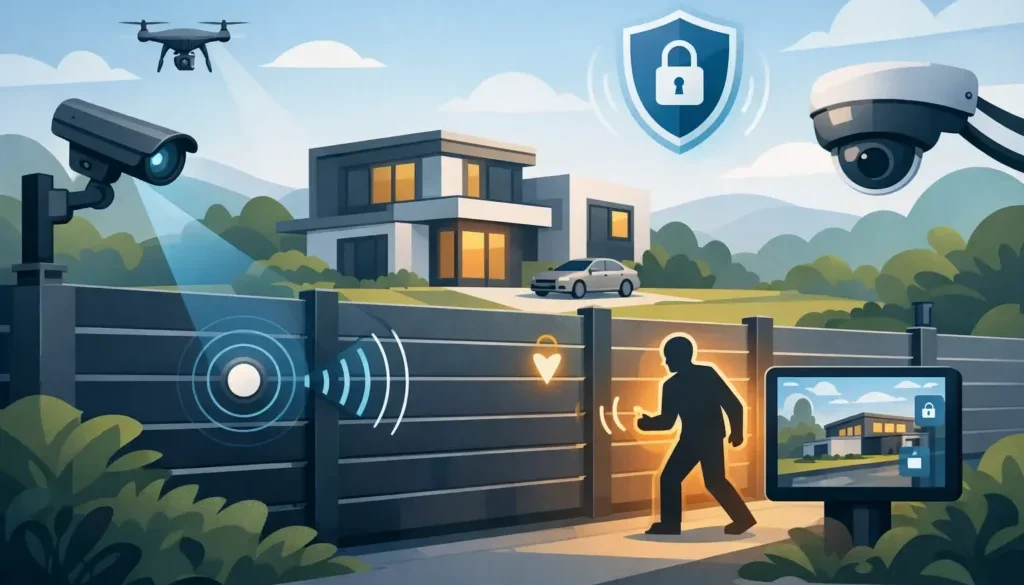
A smart fencing system may also include monitored gate status, camera coverage at entry points, motion-sensitive lighting, intercoms, and access logs. These features can be especially useful where several people need access at different times, such as apartment communities, contractor yards, storage areas, or commercial properties.
The key is choosing features that solve a real access or security problem. A simple keypad-operated gate may be the right fit for one property. Another may need an operator, safety devices, a controlled pedestrian entrance, and a stronger commercial-grade fence around the full perimeter.
Start With the Perimeter, Not the Technology
It is tempting to focus first on the gate operator or access app. In practice, the fence layout, materials, posts, gate structure, and site conditions determine whether an automated system will perform reliably over time.
A secure perimeter starts by identifying where people, vehicles, and deliveries should enter. It also means considering areas that are easy to climb, gaps between structures, visibility from the street, drainage, and the location of utilities. A gate placed too close to a busy street, for example, can create a traffic problem if vehicles must wait in the roadway while it opens.
Material selection matters just as much. Chain-link fencing is a practical choice for commercial and industrial security because it provides clear sightlines and can be built for demanding applications. Privacy fencing may make more sense for a residential yard, especially when families want separation from neighboring properties. Ornamental fencing offers a polished appearance while maintaining visibility, and it can work well around businesses, entryways, pools, and upscale residential properties.
There is no single best fence for every site. A property that needs privacy may not need the same design as a property that needs staff to see across a parking area. An experienced fencing contractor can help weigh appearance, budget, maintenance, access needs, and long-term performance before installation begins.
Smart Gate Access for Homes and Businesses
Automated gates are often the most visible part of a smart fencing plan because they turn a passive boundary into a controlled entry point. For homeowners, that can mean opening a driveway gate without leaving the vehicle and avoiding the frustration of unsecured access. For business and industrial locations, it can mean controlling vehicle traffic, limiting after-hours entry, and creating a more orderly arrival process.
Access methods should match the people who use the property. A family may prefer remotes or a keypad code. A commercial property may need credentials that can be changed when employees leave, along with a separate system for vendors or delivery drivers. Property managers may benefit from access records that help answer a basic question: who entered and when?
Gate operators also need to be selected for the gate’s weight, length, frequency of use, and available power source. A light residential operator is not designed for a busy commercial entrance that cycles all day. Choosing equipment that is undersized can lead to premature wear, service interruptions, and avoidable replacement costs.
Safety is part of the decision as well. Proper automated gate installations require suitable safety devices and controls to reduce the risk of entrapment or contact with vehicles and pedestrians. This is one reason professional design and installation matter. A gate should be secure, but it also needs to operate predictably for everyone who encounters it.
Consider Winter Performance Early
Minnesota weather adds another layer to smart gate planning. Snow buildup, ice, freeze-thaw cycles, and drifting can interfere with gate travel if the site is not prepared correctly. A sliding gate needs a clear, stable path, while a swing gate needs adequate clearance and reliable hinges.
Equipment placement, electrical planning, drainage, and service access should all be addressed before installation. The most advanced operator cannot overcome a gate that shifts because of poor footing or an entry lane that collects snow and water. Durable craftsmanship and proper site preparation are what keep the system dependable through changing seasons.
Where Smart Fencing Delivers the Most Value
Smart fencing can be useful on nearly any property, but it is particularly valuable where access needs to be controlled without having someone at the entrance at all times. A gated residential driveway, a contractor equipment yard, a warehouse lot, a storage facility, and a multi-tenant commercial site all have different needs, yet each can benefit from clearer boundaries and more reliable entry control.
For residential properties, the value often centers on safety, privacy, and convenience. A fenced yard can help create a defined space for children and pets, while a controlled gate adds another level of separation from the street. The design should still complement the home. Technology should improve daily use without making the property feel overly complicated.
For commercial and industrial properties, smart fencing supports site control. It can help direct visitors to the appropriate entrance, discourage unauthorized vehicle access, and protect equipment or inventory outside normal business hours. It also presents a more organized, professional appearance to customers, tenants, and employees.
The trade-off is that automated systems require planned maintenance. Gates have moving parts, access devices need occasional updates, and seasonal conditions can affect performance. Property owners should expect to inspect gates regularly, keep travel areas clear, and address unusual noise, slow movement, or damage before a small issue becomes a larger repair.
Planning a Smart Fencing Project
A successful project begins with a site-specific conversation. Before choosing a gate or access device, define what needs protection, who needs entry, how often the gate will operate, and what should happen after hours. It is also helpful to consider whether the system may need to expand later as the property changes.
A professional installer can assess fence style, gate size, operator requirements, power availability, access-control options, and local site conditions as one coordinated system. This avoids the common problem of installing an attractive fence first, then discovering the entry was not designed to accommodate the gate or equipment needed later.
Boulevard Fence provides fencing, gates, and gate operator solutions for residential, commercial, and industrial properties throughout the Twin Cities Metro Area. The right recommendation is not always the most complex system. It is the one that gives your property dependable protection, practical access, and a finished appearance built to last.
If you are considering a new perimeter or upgrading an existing entry, start with the daily problems you want the fence to solve. A well-designed system can make arriving home, managing a jobsite, or securing a business feel simpler from the first day it is in use.


