

A fence is often the first physical decision a visitor, customer, or potential intruder encounters at a property. Well-planned security fencing establishes a clear perimeter, directs people to the right entrance, and helps protect what matters behind it. For Twin Cities homes, commercial sites, and industrial facilities, the right solution must do more than look secure. It needs to stand up to heavy use, changing weather, and the daily realities of how the property operates.
The best fence is not always the tallest or most imposing one. It is the one designed around your specific risks, access needs, budget, and property layout. A residential backyard has different requirements than a warehouse yard, apartment community, construction site, or equipment storage area. Choosing the material, height, gate configuration, and access controls as one system leads to better long-term results.
What Security Fencing Should Accomplish
Security starts with defining boundaries. A properly installed fence tells pedestrians, drivers, customers, vendors, and unauthorized visitors where they may and may not go. That clear boundary can discourage casual trespassing before it becomes a larger problem.
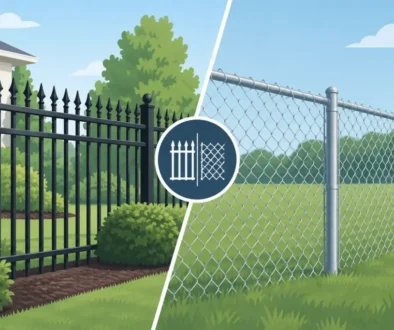
For many properties, visibility is just as valuable as separation. Chain-link and ornamental fencing allow staff, cameras, and neighbors to see through the perimeter while still creating a strong physical barrier. This can be a practical choice for commercial and industrial sites where monitoring the exterior matters. Privacy fencing, by contrast, may be a better fit for a home, a service area, or a storage location where reducing visibility from the street is a priority.
A strong security fence should also support safe access. Gates, latches, gate operators, and entry points need to work reliably for the people who are authorized to use them. A perimeter is only as effective as its weakest opening, which is why gate planning deserves the same attention as the fence itself.
Start With the Property’s Real Security Needs
Before selecting a fence style, consider what you are protecting and how the site is used. A homeowner may be focused on children, pets, pool safety, backyard privacy, or a clearer property line. A business owner may need to protect inventory, control deliveries, limit after-hours access, and present a professional appearance. Industrial properties often require greater perimeter coverage, durable materials, wider gates, and dependable vehicle access.
The surrounding area matters, too. A front-facing fence may need to complement the architecture and preserve visibility at driveways or street corners. A rear lot line bordering a public trail or open space may benefit from a more substantial barrier. On commercial sites, fencing can help separate customer parking, loading areas, employee entrances, dumpster enclosures, and restricted equipment zones.
It also helps to think beyond the immediate concern. A fence installed for privacy today may later need a gate for a landscaping crew. A business expanding its parking area may require a wider vehicle opening. Planning for likely changes can prevent an otherwise avoidable replacement or modification later.
Choosing the Right Material for Security Fencing
There is no single material that fits every security application. Each option offers a different balance of strength, appearance, maintenance, visibility, and cost.
Chain-Link Fencing for Practical Perimeter Control
Commercial chain-link fencing remains a dependable choice for many Twin Cities properties. It is durable, cost-effective, and available in a range of heights and configurations. Its open design supports sightlines, making it useful around parking areas, storage yards, athletic spaces, utility equipment, and industrial facilities.
For higher-security needs, chain-link systems can be paired with heavier framework, privacy slats, specialized fabric, or controlled-access gates. The right specification depends on the site. A simple enclosure for a small service area does not need the same construction as a large industrial perimeter exposed to frequent vehicle traffic and public access.
Ornamental Fencing for Security With a Finished Look
Ornamental fencing provides a more refined appearance without giving up the clear definition and strength of a metal perimeter. It is often a strong choice for office buildings, multi-family properties, schools, entrances, pools, and homes where curb appeal is part of the project goal.
Because ornamental fencing is open, it preserves visibility while making it obvious where access is restricted. It can also create a more welcoming first impression than a purely utilitarian barrier. For properties with public-facing entrances, that combination of security and appearance is often worth the investment.
Wood and Vinyl for Privacy and Residential Protection
Wood fencing gives homeowners a traditional, customizable solution for enclosing a yard and creating privacy. It can be designed in a range of heights and styles to fit the home and landscape. Proper installation is essential, particularly in Minnesota conditions where moisture, frost movement, and seasonal temperature swings can affect fence performance over time.
Vinyl fencing offers a clean, low-maintenance option for many residential properties. It is well suited to homeowners who want privacy, boundary definition, and a consistent finished appearance without routine painting or staining. While it may not be the first choice for every high-security commercial site, it can be an excellent fit when privacy and attractive design are the main priorities.
Gates Are a Critical Part of the System
A gate should make authorized access easier while making unauthorized access more difficult. That sounds straightforward, but gate selection involves more than choosing a width. Consider who uses the opening, how often it is used, whether vehicles need to pass through, and how the gate will be secured after hours.
Walk gates work well for employee entrances, side yards, pool enclosures, and access between sections of a property. Drive gates need adequate clearance for the vehicles that use them, whether that means passenger cars, delivery vans, garbage trucks, trailers, or maintenance equipment. A gate that is too narrow or poorly placed creates daily frustration and may encourage users to leave it open.
For busy commercial and industrial properties, an automated gate operator can improve consistency and site control. Gate operators can support keypad access, remotes, entry codes, and other access-control arrangements based on the needs of the property. Boulevard Fence can help property owners select and install gate and operator solutions that match how their site functions, rather than forcing a one-size-fits-all setup.
Installation Quality Determines Long-Term Performance
High-quality materials cannot compensate for poor layout or installation. Fence posts must be properly spaced, set, and aligned. Gates need stable posts, correctly sized hardware, and careful adjustment. Changes in grade, drainage concerns, underground utilities, and vehicle clearance all need to be addressed before the project moves forward.
This is especially relevant in the Twin Cities, where frost and soil conditions can affect fence stability. Experienced installation helps ensure the fence is built for the property, not simply placed along a line. Attention to details such as post depth, tension, gate swing, and transitions around slopes makes a meaningful difference in both appearance and performance.
Security fencing should also be maintained. Walk the perimeter periodically, check gate hardware, clear vegetation that interferes with operation, and address damaged sections promptly. A loose latch, bent post, or weakened gate may seem minor until it becomes the point where access is lost.
A Better Perimeter Begins With a Clear Plan
The right fence gives your property a stronger edge without making daily use harder. Whether you need a private residential yard, a visible commercial boundary, a controlled industrial perimeter, or an automated entry point, start by looking at how people and vehicles actually move through the site. A thoughtful design and professional installation can turn that boundary into lasting protection, dependable access, and a better-looking property.