
A fence still does the first and most visible job in perimeter protection: it establishes a clear boundary, discourages unauthorized entry, and guides people toward the right point of access. But perimeter security technology trends are changing what happens at that boundary. Property owners can now pair quality fencing with smarter gates, better visibility, and access systems that make it easier to manage who comes and goes.
For Twin Cities homeowners, businesses, and industrial facilities, the right approach is not necessarily the most complicated one. It is a well-built perimeter that fits the property, the level of risk, daily traffic patterns, and Minnesota weather. Technology should strengthen a dependable fence and gate system, not try to compensate for a weak one.
Perimeter Security Technology Trends That Matter
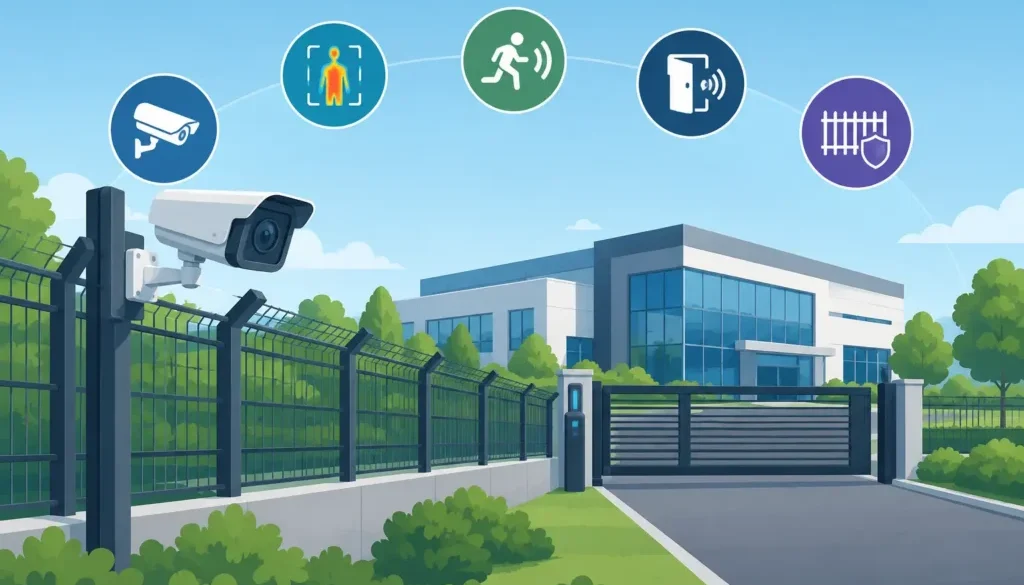
The strongest trend is integration. Instead of treating fencing, gates, cameras, lighting, and access credentials as separate purchases, property owners are planning them as parts of one perimeter system. A commercial chain-link fence may define the site, an automated gate may control vehicle entry, and cameras or lighting may help staff see activity at the gate after business hours.
This approach is practical because most security failures occur at gaps, poorly managed entrances, or areas with limited visibility. A high-quality fence provides the physical layer. Access control determines who can enter. Monitoring and lighting help document or deter activity near the boundary. When these elements work together, the property is easier to manage without creating unnecessary obstacles for residents, employees, customers, or delivery drivers.
The technology itself continues to improve, but the goal remains straightforward: create a perimeter that is difficult to bypass, easy for authorized users to navigate, and built to last.
Smarter Gate Access Replaces the Shared-Key Problem
Keys are simple, but they are difficult to control once they have been copied, loaned out, or lost. That is why keypad entry, remote controls, card or fob readers, and mobile access options are becoming more common for gated properties.
For a homeowner, a keypad gate can provide a convenient way for family members, trusted contractors, or service providers to enter without handing out physical keys. For a multifamily community or commercial site, access credentials can be assigned to specific people and changed when staffing or tenancy changes. This gives managers more control over entry without replacing locks or rekeying an entire facility.
Automated gate operators are also becoming more capable. Modern systems can be selected to suit swing gates or sliding gates, traffic volume, gate weight, safety requirements, and available power. The right operator must be paired with a properly designed gate. An operator cannot make up for sagging posts, undersized hardware, poor drainage, or a gate that is not aligned correctly.
Cold temperatures, snow buildup, ice, and freeze-thaw movement all deserve consideration in the Twin Cities. A gate system should be installed with clear travel paths, stable foundations, appropriate safety devices, and components suited to local conditions. Reliable access starts with sound construction.
Cameras Are Moving Closer to the Fence Line
Security cameras are no longer used only at front doors or building entrances. More property owners are placing cameras at drive gates, pedestrian gates, loading areas, rear boundaries, and other points where a fence line meets regular activity.
The most useful camera placement is not always the widest view. A camera needs a clear sightline to capture meaningful detail at the moment a person or vehicle approaches an entry point. That may mean planning camera positions while the fence and gate layout are being designed, rather than mounting equipment after the fact where it is convenient but ineffective.
Cameras can help a property manager review an access event, verify a delivery, or investigate damage to a gate. They can also support better day-to-day awareness around a large yard, warehouse, storage lot, or industrial site. However, cameras have limits. Rain, snow, darkness, glare, network interruptions, and poorly positioned equipment can reduce their value. They work best when paired with lighting and a well-defined perimeter that directs activity toward monitored entrances.
Property owners should also consider privacy expectations. Residential cameras should focus on the owner’s driveway, gates, and property boundaries rather than neighboring private spaces. Commercial sites need clear internal procedures for who can access recorded footage and how long it is retained.
Detection Technology Has Become More Selective
Motion detection and perimeter sensors have improved, particularly for commercial and industrial applications where after-hours monitoring is a priority. Systems may detect movement near a gate, a specific section of fence, or a protected storage area and send an alert to designated staff or a monitoring service.
The value of these systems depends on reducing false alarms. A sensor that activates every time wind moves a branch, wildlife crosses a yard, or snow accumulates near equipment will quickly be ignored. Site conditions matter. An open industrial property with a large equipment yard has different needs than a residential backyard or a small office parking lot.
For higher-security locations, detection technology can provide an early warning before someone reaches a building. For many ordinary properties, it may be more practical to invest first in a durable fence, a secure gate latch or operator, clear lighting, and camera coverage at primary access points. Security investments should follow the property’s actual vulnerabilities, not simply the latest feature list.
Lighting Supports Security and Daily Use
Good perimeter lighting is one of the most effective improvements a property owner can make. It helps visitors find gates and walkways, improves camera visibility, and makes it harder for someone to approach unnoticed after dark.
The current trend is toward efficient LED fixtures, timed schedules, and motion-activated lighting in selected areas. A commercial property may benefit from consistent lighting at employee entrances, dumpster enclosures, loading zones, and drive gates. A homeowner may prefer subtle lighting near a side gate or backyard entrance that improves safety without shining into nearby homes.
More light is not always better. Poorly aimed fixtures can create glare, deep shadows, or complaints from neighbors. The best plan uses lighting purposefully, focusing it on gates, paths, parking areas, and other locations where people need visibility.
Fence Design Is Still the Foundation
Technology often receives the attention, but the fence remains the physical backbone of perimeter security. The material, height, layout, gate placement, and installation quality all affect how well the system performs.
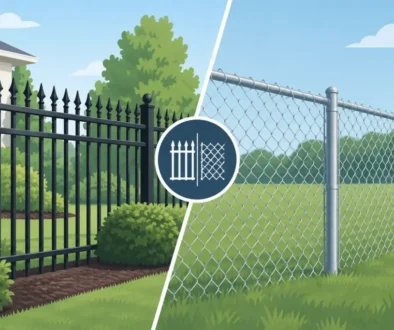
Chain-link fencing remains a practical option for many commercial and industrial properties because it is durable, visible, and adaptable to large perimeters. Privacy slats or screening can be added where visual separation is needed. Ornamental fencing can provide a more refined appearance for offices, multifamily properties, schools, and homes while maintaining a defined boundary. Wood and vinyl fencing are popular residential choices where privacy and curb appeal are central priorities.
The best choice depends on what the fence needs to accomplish. A backyard privacy fence has different requirements than a secured contractor yard. A property with frequent vehicle traffic needs a gate system that can handle repeated cycles. A highly visible commercial frontage may need security without looking overly industrial.
Professional installation is especially important where a fence connects to an automated gate. Posts, hinges, rollers, latches, and gate frames must be designed to carry the load and maintain alignment over time. Precision at installation prevents many of the service issues that appear later.
Choosing Technology Without Overbuilding the Project
A useful security plan begins with a few direct questions: Where are people entering now? Which areas are difficult to see? Is the concern privacy, trespassing, theft, traffic control, or all of the above? Who needs regular access, and how will they use it?
A homeowner may find that a privacy fence, a lockable side gate, and targeted lighting solve the real problem. A business may need controlled vehicle access, cameras at key entrances, and a gate operator that supports daily deliveries. An industrial site may require a more layered approach with durable chain-link fencing, controlled entry, lighting, and monitoring around equipment storage.
Cost, maintenance, and usability should remain part of the decision. More technology can mean more components to inspect, power, update, and repair. A system that is simple enough for staff or family members to use consistently is often more effective than a complicated system that gets bypassed.
A well-planned fence and gate system gives security technology a solid place to work. Whether the priority is a private backyard, a controlled commercial entrance, or a protected industrial yard, Boulevard Fence can help property owners build a perimeter that looks professional, performs reliably, and is ready for the right level of modern security.