
A gate that will not open during a Minnesota snowstorm, closes too slowly at a busy entrance, or reverses without warning creates more than a daily frustration. Automatic gate operator installation must account for the gate itself, site conditions, traffic patterns, safety devices, and the demands of a Twin Cities winter. When those details are planned correctly from the start, an automated gate provides dependable access control and lasting protection for years.
Start With the Gate, Not the Operator
An automatic operator can only perform as well as the gate it moves. Before choosing equipment, the gate must be properly sized, aligned, supported, and built for repeated use. A residential driveway gate that opens a few times a day has different requirements than a commercial entrance serving employees, deliveries, visitors, and service vehicles throughout the day.
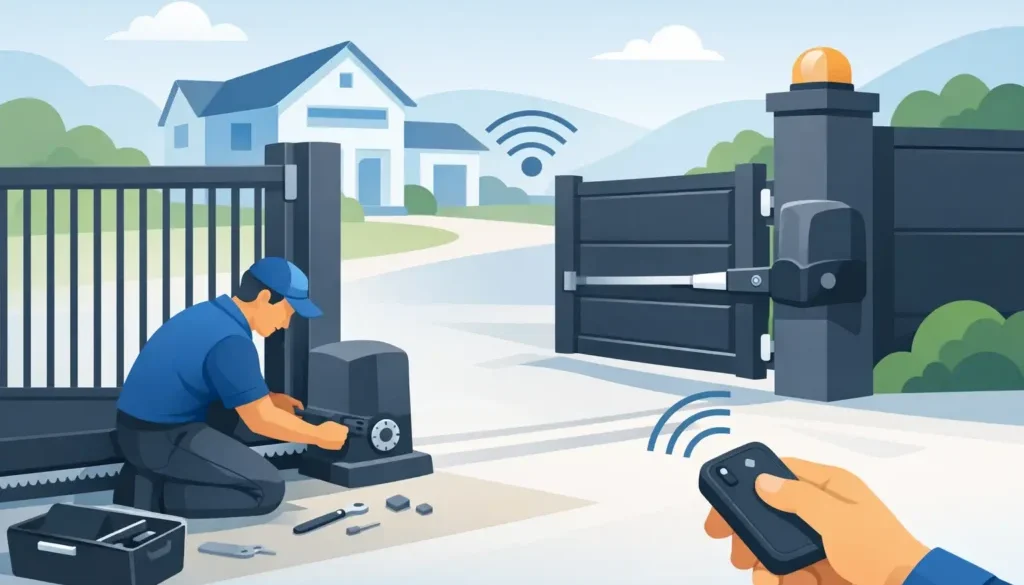
Sliding gates are often a strong choice where there is limited room behind the gate opening or where a long, heavy gate needs stable movement. Swing gates can provide a more traditional appearance and work well when the driveway has adequate clearance and a suitable grade. The correct choice depends on available space, gate weight, wind exposure, vehicle approach, and the desired look of the property.
For existing gates, an on-site evaluation matters. Sagging frames, worn hinges, uneven track, loose posts, and poor drainage can all shorten operator life. Correcting those issues before automation protects the investment and prevents avoidable service calls.
What a Proper Automatic Gate Operator Installation Includes
A complete installation is more than mounting a motor beside a gate. The operator, structural components, electrical service, and safety equipment must work as one system. The goal is controlled access without creating inconvenience for residents, employees, guests, or first responders.
Selecting the Right Operator Capacity
Gate operators are rated for specific gate weights, lengths, and expected cycles. Choosing an undersized operator may reduce upfront cost, but it can lead to slow operation, excess wear, and early failure. Choosing a commercial-duty unit for a lightly used residential gate is not always necessary either. The right fit comes down to the actual demands of the site.
A contractor should consider the gate’s size and material, how often it will operate, the desired opening speed, and local weather conditions. Ornamental steel, chain-link, wood, and vinyl gates all carry different weights and react differently to wind and seasonal movement. A properly matched operator delivers steadier performance and helps preserve the gate structure.
Building a Stable Foundation
Operators need a secure mounting surface. For slide gates, that typically means a properly prepared concrete pad and correctly placed guide and support components. Swing gate operators require strong, well-set posts and hinges that can support the gate without binding.
In the Twin Cities, frost movement and drainage deserve close attention. Water that pools around an operator pad, gate track, or post can freeze, shift soil, and interfere with operation. Proper grading and a stable base help keep the system aligned through changing seasons.
Providing Reliable Power
Most automatic gate systems require dedicated electrical power. Planning the power source early helps avoid exposed wiring, inconvenient equipment placement, and costly changes later. In some locations, solar power may be an option, especially where trenching is difficult. However, solar performance depends on panel exposure, battery capacity, operator usage, and winter conditions.
For high-use commercial and industrial entrances, hardwired power is often the most dependable choice. Backup batteries can also be valuable when power outages would leave a property inaccessible or unsecured.
Safety Equipment Is Not Optional
An automated gate is a moving piece of equipment, and safety must be built into the design. Proper installations use monitored safety devices and controls that help prevent the gate from closing on vehicles, people, pets, or objects in its path.
Key safety considerations include photo eyes, monitored sensing edges, entrapment protection, warning signs, and correctly placed controls. The placement of these components matters as much as the components themselves. A safety device that is blocked by landscaping, placed outside the travel path, or exposed to frequent damage cannot do its job reliably.
Vehicle loops or other exit devices also need careful planning. A loop placed too close to the gate may not provide enough room for a vehicle to clear the opening before the gate begins closing. On a commercial site, the layout should account for trucks, delivery vans, employee traffic, and visitors who may not understand the access process.
A professional installer will also consider emergency access. Fire departments, service providers, and property managers may need specific entry arrangements depending on the property and local requirements.
Access Control Should Match How the Property Is Used
The operator moves the gate, but the access control system determines who can use it. A homeowner may need a keypad and remote controls. A multifamily property may benefit from a call box or telephone entry system. A commercial facility may need key cards, key fobs, keypad codes, timed access schedules, or a combination of methods.
The most effective system is not always the most complicated one. A busy warehouse entrance may need quick, repeatable access for authorized drivers, while a private residence may prioritize simplicity and visual discretion. During planning, it helps to identify who enters the property, when they enter, and what happens if they do not have a credential.
Consider these practical questions before installation:
- Will delivery drivers need a call box, keypad code, or scheduled access?
- Does the entrance need separate controls for residents, employees, visitors, and service vehicles?
- Is there enough room for vehicles to wait safely off the street while the gate opens?
- What access method will be available during a power outage or equipment service?
Clear answers help prevent a system that looks impressive but creates daily bottlenecks.
Site Layout Can Make or Break Performance
A well-built operator cannot fix a poorly designed entrance. The gate should have room to travel fully without blocking traffic lanes, sidewalks, or parking areas. Vehicles need enough approach distance to stop safely, use a keypad or call box, and wait while the gate opens.
This is especially important near busy Twin Cities streets. A gate set too close to the road can force vehicles to wait in traffic. A gate that opens toward a sloped driveway may require special design work to avoid scraping or binding. Snow storage should also be considered. Plowed snow can block slide gate paths, cover safety devices, and make manual access difficult.
For commercial and industrial properties, entrance design should allow for the largest expected vehicle. A gate opening that works for passenger cars may be too narrow for delivery trucks, waste collection, maintenance equipment, or emergency vehicles.
Professional Installation Protects the Investment
Automatic gates combine fencing, structural work, electrical coordination, safety controls, and access technology. That is why professional installation provides value beyond the equipment itself. A qualified fence contractor can evaluate the full perimeter, recommend a gate style that fits the property, and install the supporting structure with the operator in mind.
Boulevard Fence provides customized gate and operator solutions for residential, commercial, and industrial properties throughout the Twin Cities Metro Area. As an authorized Aleko gate and gate operator dealer and installer, the team can help property owners select equipment that fits the gate design, traffic level, security needs, and budget.
The installation process should also include a clear walkthrough after the system is complete. Property owners and managers need to understand daily operation, manual release procedures, basic cleaning, and when to call for service. Keeping the gate path clear, checking photo eyes, removing snow and debris, and addressing unusual sounds early can extend the life of the system.
Plan for Long-Term Use, Not Just Opening Day
The best automated gate is one that becomes a reliable part of the property rather than a recurring concern. That means choosing durable materials, allowing room for vehicles, using the right operator capacity, and planning safety equipment from the beginning.
Whether the goal is added privacy at home, controlled access at an apartment community, or stronger perimeter security at a business, a properly designed gate system can improve both protection and property presentation. A site consultation and free estimate are a practical first step toward an entrance that operates confidently in every season.


