
A gate operator has one job that matters more than any feature on the box: open and close a properly built gate reliably, every day. This Aleko gate operator review looks at where Aleko systems can be a strong fit for Twin Cities homes, businesses, and managed properties, along with the installation details that determine whether an automated gate remains dependable through heavy use and winter weather.
Aleko offers gate automation options for common swing-gate and sliding-gate applications. That range makes the brand worth considering for property owners who want controlled vehicle access without moving to a more complex commercial access-control system than their site requires. The right operator, however, is only one part of the project. Gate weight, travel distance, hardware, power, safety devices, and site layout all need to work together.
Aleko Gate Operator Review: The Practical Verdict
Aleko gate operators are generally a practical choice for residential properties, light commercial entrances, private driveways, and other applications with clearly defined access needs. They can provide dependable automated entry when the equipment is correctly matched to the gate and installed with the right safety and control components.
Their value is strongest when a property owner needs a capable system without paying for features designed for a high-volume industrial entrance. An Aleko swing operator can make sense for a driveway gate that opens several times a day. A sliding operator may be a better choice for a heavier gate or a site where a swinging leaf would interfere with parking, snow storage, or traffic flow.
The trade-off is that gate automation is not a one-size-fits-all purchase. A model that is appropriate for a light residential ornamental gate may not be suitable for a long, solid privacy gate exposed to wind or for a commercial entrance with frequent deliveries. Selecting an operator based only on advertised weight capacity can lead to poor performance and premature wear.
What Determines Operator Performance
The operator receives most of the attention, but the gate itself sets the foundation. A new motor cannot correct a gate that drags, sags, binds, or shifts with seasonal ground movement. Before automation begins, the gate should move freely by hand, sit level, and have properly sized hinges, rollers, posts, and track where applicable.
For swing gates, the gate leaf length matters as much as its weight. A long gate creates more leverage at the hinge and places greater demand on the operator, especially when wind pushes against a solid panel. Open-frame ornamental gates tend to create less wind load than full privacy gates, but every installation should account for the gate design and exposure.
Sliding gates require an equally sound base. The track, wheels, guide rollers, and gate frame must carry the load smoothly from the fully closed to fully open position. Snow, ice, leaves, gravel, and poor drainage can interrupt that travel. In Minnesota, thoughtful placement and site preparation help reduce service issues when winter conditions arrive.
A professional assessment should also consider how often the gate will cycle. A private home may use the gate only a few times each day. A small business with employees, service vehicles, and deliveries may require considerably more cycles. Choosing capacity for actual use rather than minimum use gives the system a better chance of delivering long-term value.
Swing or Sliding: Which Aleko System Fits?
A swing-gate operator is often the natural choice for residential driveways with enough clear space inside the property line for the gate to open. It can preserve a clean, traditional appearance and works well with wood, vinyl, ornamental, and chain-link gate designs when the structure is engineered for automation.
Outward-opening swing gates require extra caution. A gate should not open into a public sidewalk, road, or other area where it can obstruct people or vehicles. Grade also matters. A sloped driveway may limit the swing path and call for a different gate configuration.
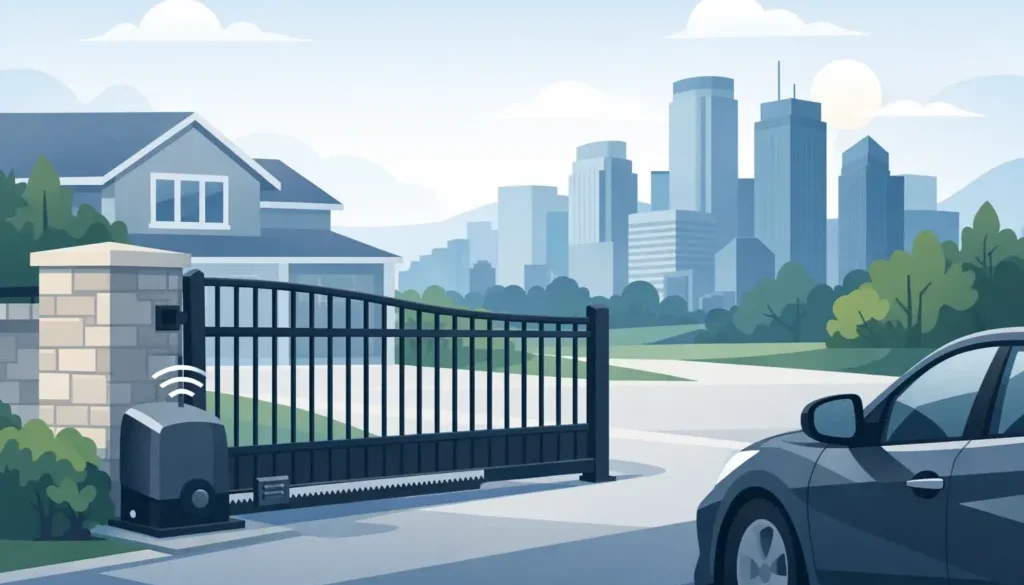
A sliding gate is often the better answer when driveway space is tight, traffic volume is higher, or a larger gate opening is needed. It moves parallel to the fence line instead of into the driveway, which can be useful for commercial yards, multifamily properties, and facilities with delivery traffic. The site needs adequate room along the fence for the gate to travel fully open.
Neither style is automatically better. The right choice depends on the available space, the gate material, daily use, winter maintenance plan, and the level of access control the property needs.
Cold-Weather Considerations in the Twin Cities
Gate operators in Minneapolis, St. Paul, and surrounding communities must contend with conditions that are harder on moving equipment than a mild climate. Freeze-thaw cycles can affect posts and gate alignment. Blowing snow can collect in a sliding gate path. Ice buildup can prevent a gate from closing completely or trigger a safety reversal.
The best way to prepare an automated gate for winter is to address the site before the operator is installed. Posts should be built for local conditions, the driveway approach should drain well, and sliding-gate travel areas should be accessible for snow removal. A gate that is already difficult to operate manually will become more difficult after a storm.
Power planning is also important. Hardwired power is often the most consistent option for a frequently used gate. Solar configurations can be useful in select locations, particularly where running electrical service would be difficult, but panel exposure, battery capacity, shading, and expected usage must be evaluated honestly. Short winter days and snow-covered panels can affect available charging.
Routine attention helps as well. Keeping tracks clear, checking fasteners and hinges, and inspecting photo eyes for snow or debris can prevent avoidable interruptions. A gate operator is mechanical equipment, not a set-it-and-forget-it feature.
Safety and Access Control Are Not Add-Ons
An automated gate needs safeguards that protect vehicles, pedestrians, pets, and property. Photo eyes, warning devices, properly positioned controls, and reversing functions are central to a responsible installation. A gate should never close on a vehicle or person, and controls should be located where users have clear visibility of the gate movement.
The access method should match the property. A single-family home may need remotes, keypads, or a phone-based entry option. A commercial or managed property may benefit from keypads, card readers, call boxes, vehicle sensors, timed access schedules, or integration with a broader access-control plan.
Exit arrangements deserve the same attention as entry. Vehicles need a safe and reliable way to leave without requiring a driver to stop in a traffic lane or operate the gate manually. Depending on the site, that may involve an exit loop, keypad, remote, or another approved control method.
Installation Quality Makes the Difference
A gate operator installation involves more than mounting a motor and programming a remote. The work may include fabricating or reinforcing the gate, setting posts, running electrical conduit, installing safety devices, configuring access controls, and testing travel limits under real operating conditions.
This is where professional installation provides a meaningful advantage. Proper alignment reduces strain on the operator. Correct wiring protects the equipment and supports reliable controls. Careful setup ensures the gate stops where it should, reverses when necessary, and works consistently for the people who use it.
As an authorized Aleko dealer and installer, Boulevard Fence can evaluate the entire gate system rather than treating the operator as a separate purchase. That includes the fence, gate structure, operator selection, access controls, and site conditions that affect day-to-day performance.
Is an Aleko Operator Right for Your Property?
Aleko may be a good fit if your property has a well-built gate, moderate operating demands, and a clear need for convenient controlled access. It can work especially well for residential driveways, private lots, smaller commercial entrances, and properties that need an automation solution matched to their budget and usage.
It may not be the best choice when the entrance experiences very high traffic, has unusually heavy gate leaves, needs specialized integrations, or serves a demanding industrial operation. In those cases, the recommendation should be based on the full application, not brand preference alone.
The most useful next step is to start with the gate, not the operator. A site evaluation can identify the gate style, opening width, required travel path, power options, safety requirements, and access controls that will make the system work as intended. A properly matched Aleko operator can turn an entry gate into a dependable part of your property, rather than another piece of equipment that needs attention after every storm.


