A gate should do more than mark the edge of a property. For a homeowner, it may need to keep children and pets safely inside the yard while making daily arrivals easier. For a business or industrial site, it may need to control vehicle entry, discourage unauthorized access, and keep operations moving. Smart gates combine a durable physical barrier with automation and access control to meet those practical needs.
The right system is not simply the one with the most features. It is the gate, operator, controls, and safety equipment that fit the property’s traffic, layout, security goals, and Minnesota weather. A well-planned automated gate adds real convenience, but it also needs to be built and installed for dependable long-term operation.
What Makes a Gate Smart?
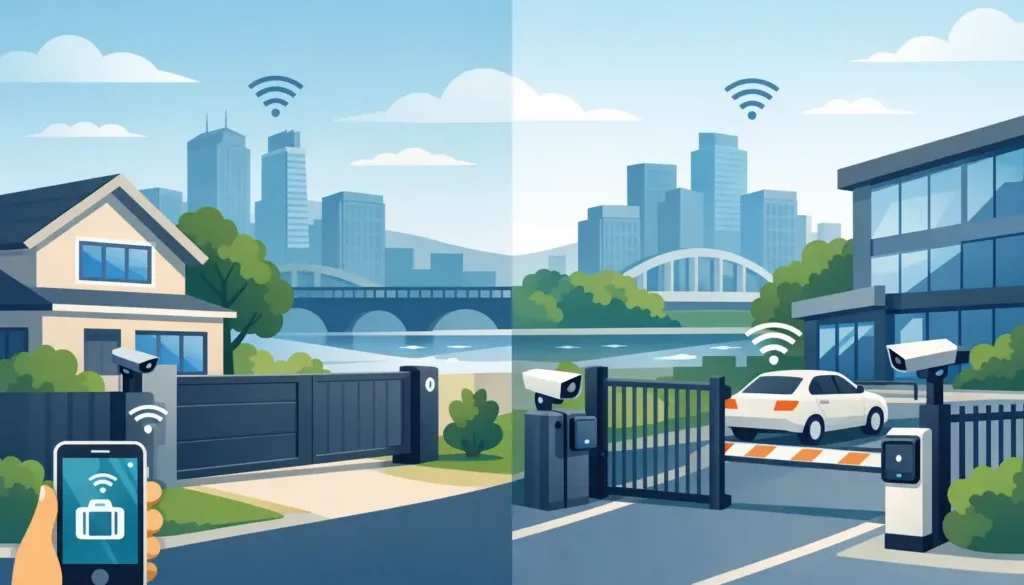
A smart gate uses an automated operator and controlled entry method rather than requiring someone to open and close it by hand. The operator moves the gate, while access-control equipment tells the system who is allowed to enter and when. Depending on the property, that can include a remote transmitter, keypad, card or fob reader, telephone entry system, vehicle sensor, or mobile app.
Many systems can also provide activity records, scheduled access, and remote control. A property manager may issue credentials to tenants or vendors without distributing physical keys. A homeowner may check gate status from a phone before leaving for work. These capabilities are useful, but they should support the way people actually use the property rather than add unnecessary complexity.
The gate itself remains the foundation. An operator cannot compensate for a poorly designed gate, inadequate posts, weak hardware, or a layout that does not allow the gate to travel correctly. Quality materials and precise installation are what give an automated system the strength to perform day after day.
Choosing Smart Gates by Property Need
The best gate configuration depends on how much space is available, how often the gate will operate, and what level of control the property requires. Residential driveways often benefit from straightforward access options and a gate style that complements the home and existing fence. Commercial and industrial sites may need heavier construction, faster operation, managed credentials, and equipment that can handle repeated daily cycles.
Residential Driveway Gates
For a home, smart access is often about convenience with added peace of mind. A remote, keypad, or app-based control allows family members to enter without getting out of the vehicle. A keypad can also provide a practical access method for trusted visitors, service providers, or delivery drivers.
Swing gates are a popular choice when there is room for the gate leaves to open inward. They can create a classic, polished entrance and pair well with ornamental aluminum, steel, vinyl, or wood fencing. Sliding gates are often a better fit for driveways with limited swing clearance, sloped approaches, or specific site restrictions. The driveway grade, available side room, snow storage, and drainage should all be evaluated before selecting a design.
A residential system does not always need advanced credential management. In many cases, a reliable operator, a few remotes, a keypad, and properly installed safety devices are the better investment. The goal is controlled access that remains easy for the household to use.
Commercial and Multi-Family Properties
At apartment communities, office properties, storage yards, and other commercial locations, smart gates can help establish a clearer entry process. They can direct vehicles to a designated point, limit access after hours, and reduce the need for staff to manually manage every arrival.
These properties often benefit from telephone entry systems, keypads with individual codes, fobs, cards, or mobile credentials. The right choice depends on who uses the gate. A multi-family property may prioritize resident and visitor access, while a contractor yard may need controlled entry for employees, fleet vehicles, and scheduled deliveries.
Traffic volume matters as much as access control. A gate operator rated for occasional residential use may not be appropriate for a busy commercial entrance. Selecting equipment based on expected cycles, gate weight, and operating speed helps prevent early wear and avoidable downtime.
Industrial and High-Security Sites
Industrial facilities, distribution areas, utility sites, and secured storage properties often need a gate system as part of a larger perimeter security plan. Here, the gate must handle substantial use while supporting clear rules for authorized vehicles and personnel.
A heavy-duty slide gate is commonly used for wide openings and frequent cycles. Access may be tied to credential systems, staffed entry points, vehicle loops, or scheduled operating hours. Gate design should also account for truck turning paths, emergency access, and the amount of clearance needed when the gate is open.
Smart controls add accountability, but they are not a substitute for the right fence height, gate structure, lighting, surveillance, and site procedures. Security works best when each part of the perimeter supports the others.
Smart Gate Features That Matter Most
There is no single feature list that fits every property. A dependable system begins with the right operator and safety equipment, then adds access features that solve a defined problem.
Safety devices are essential. Photo eyes, monitored edges, and vehicle detection systems help prevent a gate from closing on a person, vehicle, or object. The required equipment can vary based on gate type and installation conditions, but safety should never be treated as an add-on. Gates move with significant force, and the system needs proper protection for everyone using the entrance.
Remote access can be valuable for owners and managers who need to open the gate from off-site. It can be especially helpful when coordinating contractors, deliveries, or maintenance visits. However, remote control relies on dependable connectivity and clear user permissions. A basic keypad or local transmitter remains a sensible backup when internet service is interrupted.
Credential-based entry gives commercial and multi-family properties more control than a shared physical key. Codes and credentials can be changed when residents move, staff changes, or a vendor relationship ends. The trade-off is that the system needs administration. Someone must keep access lists current and remove outdated permissions promptly.
Battery backup is worth considering for entrances where reliable access during a power outage is critical. In some applications, the gate should automatically release or remain open under specific emergency conditions. These decisions should be planned around the property’s security needs and local safety requirements.
Minnesota Weather Changes the Installation Plan
Twin Cities weather places real demands on gates and operators. Freeze-thaw cycles, snow, ice, road salt, and strong seasonal temperature changes can affect moving equipment if the system is not designed for the site.
For slide gates, the travel path must be kept clear of snow, ice, gravel, and debris. Proper grading and drainage reduce the risk of water collecting where it can freeze. Swing gates need adequate clearance from the driveway surface so snow buildup does not interfere with movement. Posts, hinges, rollers, latches, and operator mounts all need to be installed with durability in mind.
Regular inspection also makes a difference. A gate that begins to move slowly, make unusual noise, reverse unexpectedly, or fail to close consistently should be inspected before a minor issue becomes a larger repair. Keeping photo eyes clean, clearing the travel area, and testing access devices are simple steps that protect the investment.
Plan the Gate and Fence as One System
An automated entrance is strongest when it is designed with the surrounding fence, driveway, and property use in mind. The gate should match the fence material and style while meeting its own structural demands. A light decorative gate may look appropriate at the entrance, but it still needs the framing, posts, and hardware required for automation.
Before installation, consider the full approach to the gate. Where will vehicles wait while the gate opens? Is there enough room to keep them out of the street? Can delivery trucks turn safely? Where will visitors find the keypad or call box? Is the equipment positioned where it can be serviced without disrupting traffic?
A professional site evaluation identifies these details early. It also helps determine whether a swing, slide, cantilever, or other gate design is the practical choice for the opening. Boulevard Fence can help Twin Cities property owners select fencing, gates, operators, and access-control features that work together as a complete installation.
A Better Entry Starts With the Right Questions
The most effective smart gate is not the most complicated one. It is the system that opens reliably for authorized users, provides the appropriate level of security, and stands up to the property’s daily demands. Start with how the entrance is used, who needs access, and what happens during winter weather or a power outage. Those answers lead to a gate system that protects the property without making access harder than it needs to be.


