A privacy fence has to do more than block a view. It needs to fit the property, stand up to Minnesota weather, provide convenient access, and look right from both inside and outside the yard. This privacy fence planning guide helps Twin Cities property owners make the key decisions before installation begins, reducing surprises and creating a finished fence that delivers lasting value.
Start With the Purpose of the Fence
The best fence plan begins with a clear problem to solve. A homeowner may want a more secluded backyard for family time, a secure boundary for children or pets, or a better-looking replacement for an aging fence. A commercial property may need screening around equipment, a clearer site perimeter, or controlled access at a service entrance.
Privacy may be the primary goal, but it is rarely the only one. Think about visibility, security, curb appeal, wind exposure, maintenance expectations, and the way people move through the property. A fence that provides complete backyard screening may not be the right choice along a front-facing property line or near a driveway where sightlines matter.
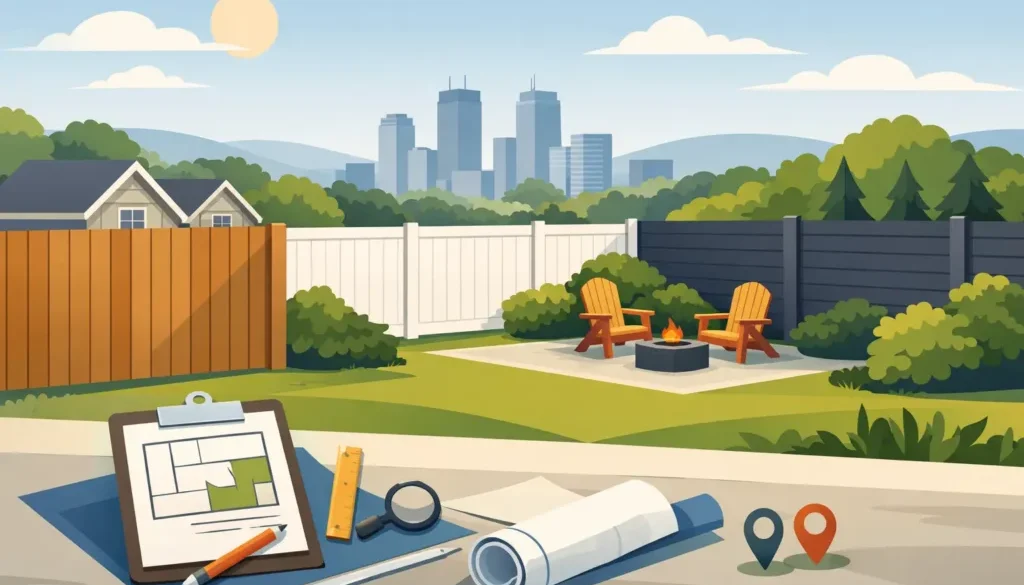
Before selecting a style, walk the property and identify the areas where privacy is most valuable. Many projects do not require the same fence along every boundary. For example, a solid wood or vinyl fence may make sense behind the home, while ornamental fencing or an open-style design may better suit a visible side yard.
Confirm Property Lines, Rules, and Site Conditions
Fence placement is one of the most important parts of planning. Installing even a quality fence in the wrong location can create expensive setbacks later. Review your survey or property documents when available, and consider a professional survey if the boundary is uncertain. Existing trees, landscape beds, retaining walls, utility boxes, and neighboring fences can all affect the final layout.
Twin Cities communities have their own rules for fence height, placement, and permit requirements. Requirements can differ between Minneapolis, St. Paul, and surrounding municipalities, particularly for corner lots, front yards, and properties near alleys. Homeowners association rules may also affect permitted materials, colors, or fence styles.
Do not rely on a neighbor’s fence as proof of the property line. That fence may be offset, installed before current rules, or located entirely on the neighboring property. A careful layout protects your investment and helps preserve good neighbor relationships.
Underground utilities also need attention before any posts are set. Utility markings help installers plan around gas, electric, communications, water, and other buried lines. Private lines, such as irrigation systems, invisible pet fences, and landscape lighting, may require separate consideration.
Plan for Corners, Grades, and Drainage
A level drawing can look simple, but real properties have slopes, drainage paths, and uneven ground. Fence panels can follow the grade in a stepped pattern or be racked to follow a gradual slope, depending on the material and design. Each approach changes the appearance at the bottom of the fence and can affect how well it contains pets or blocks views.
Water should continue to drain away from the home and through the yard as intended. A privacy fence should not accidentally create a low point where water collects, wash out soil beneath panels, or interfere with a swale. Mature trees deserve special attention as well. Their roots can limit post placement, while low branches may affect fence height and long-term maintenance.
Choose a Material That Matches the Job
Wood and vinyl are common choices for residential privacy fencing, but they serve different priorities. Wood offers a natural appearance and design flexibility. It can be built in styles ranging from traditional solid-board fencing to shadowbox designs that provide privacy while allowing airflow. Wood does require periodic care, including staining, sealing, or painting when appropriate, to maintain its appearance and help protect it from the elements.
Vinyl privacy fencing provides a clean, consistent look with low routine maintenance. It does not require painting or staining, and it is a strong choice for owners who prefer a finished appearance with less upkeep. The available styles and colors are more defined than wood, so it is worth reviewing the options closely before committing to a design.
For properties where security or visibility is equally important, privacy does not always mean a fully solid fence. Chain-link fencing with privacy screening can be practical around service areas, recreation spaces, or larger commercial sites. Ornamental fencing can establish a durable, professional perimeter while preserving visibility. The right solution depends on what needs to be screened and what needs to remain visible.
Minnesota winters make material quality and installation details especially important. Freeze-thaw cycles, heavy snow, wind, and seasonal moisture place real stress on posts, rails, and gates. A lower initial price can become costly if the fence is not designed and installed for local conditions.
Select the Right Height and Style
A six-foot privacy fence is a common choice for residential backyards, but the ideal height depends on the view being blocked, local requirements, and the surrounding terrain. A fence at the bottom of a slope may not screen a raised deck or neighboring window. Taller fencing may be restricted in some locations, so planning should account for applicable codes before the design is finalized.
Style affects both privacy and appearance. A solid board fence gives the most complete screening. A shadowbox fence creates a more finished look from both sides and allows some air movement, though it offers less total privacy at certain angles. Decorative top accents, lattice, and post caps can add character, but they should complement the home rather than compete with it.
Consider how the fence will look from the street, the patio, and the neighbor’s side. Good fence design does not treat the outward-facing side as an afterthought. Consistent craftsmanship and a balanced layout create a property improvement that feels intentional from every angle.
Build Gates Into the Plan Early
Gates are often the part of a fence owners notice most after installation. A gate that is too narrow for lawn equipment, trash bins, pool access, or service needs can become a daily inconvenience. Plan gate locations before the fence line is finalized, not after the posts are set.
Think through how the property is used throughout the year. A rear gate may be needed for landscaping equipment. A side gate can provide a direct route between the front and back yard. Commercial and industrial properties may require wider vehicle gates, access controls, or automated gate operators for dependable site entry.
Gate hardware matters. Hinges, latches, posts, and framing need to support the gate’s weight and frequent use. For larger access points, an automated solution may improve security and convenience, but it should be planned with power, safety devices, vehicle traffic, and operating clearances in mind.
Set a Budget Based on Long-Term Value
Fence pricing is influenced by more than linear footage. Material selection, height, grade changes, post conditions, demolition of old fencing, gate count, permit needs, and access to the work area all affect the project scope. A straightforward backyard run is different from a fence with multiple corners, difficult terrain, or a wide access gate.
It helps to decide where the project needs to perform at the highest level. If the main goal is backyard privacy, prioritize durable materials, solid posts, and proper gate construction in that area. If an ornamental front section is part of the plan, choose a design that coordinates with the privacy fence while serving the different needs of the space.
A detailed estimate should make the scope clear. Ask how old fencing will be handled, what material and style are proposed, where gates will be located, and whether site conditions could affect the work. Clear expectations before installation help keep the project efficient and prevent last-minute compromises.
Work With an Experienced Local Fence Contractor
A fence is a permanent addition to the property, so planning and installation should work together. An experienced contractor can evaluate the terrain, recommend material options, identify practical gate locations, and build a fence that fits the property rather than forcing a standard layout onto it.
Boulevard Fence provides customized residential, commercial, and industrial fencing solutions throughout the Twin Cities Metro Area. From private backyard enclosures to secure perimeters and automated gates, a professional consultation can turn early ideas into a clear plan and a dependable finished result.
The right privacy fence should feel like it has always belonged on the property: secure where it needs to be, attractive from every view, and built to handle the seasons ahead. Start with the site, plan for the way you live or operate, and choose craftsmanship that will continue to serve the property long after installation day.


