

2026 Commercial Access Control Trends to Watch
A gate that stays open after an employee leaves, a delivery driver waiting at an unmarked entrance, or a shared key that cannot be tracked can create real security gaps. Commercial access control trends are moving property owners away from simple lock-and-key systems and toward controlled, documented entry at the perimeter.
For Twin Cities businesses, the right system is not necessarily the one with the most features. It is the one that fits the site, supports daily operations, holds up to Minnesota weather, and gives managers a clear way to control who enters and when. Gates, fencing, credentials, intercoms, and operator equipment all need to work together.
Commercial Access Control Trends Shaping Business Properties
The strongest trend is integration. Commercial facilities are no longer treating fencing, gates, and access devices as separate purchases. A secure perimeter begins with the fence line, but it also depends on how vehicles, employees, contractors, and visitors move through that boundary.
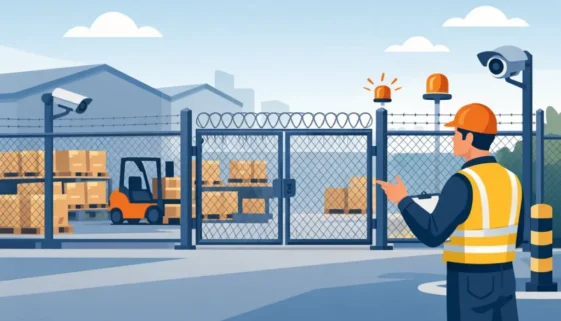
A warehouse may need a slide gate with keypad access for scheduled freight traffic. A multi-tenant office property may need a pedestrian gate, card credentials, and a visitor call box. A contractor yard may need controlled vehicle access after normal business hours without requiring someone to remain on-site. Each property has different traffic patterns, risk levels, and operating hours.
That is why access control planning is becoming more site-specific. Property managers are asking practical questions before selecting equipment: Who needs access? At what times? Will large trucks need clearance? What happens during a power outage? How will a visitor request entry? These details affect everything from gate type and operator selection to credential management.
Mobile Credentials Continue to Grow
Physical keys are simple, but they are difficult to manage once they are copied, lost, or passed from one person to another. Card readers and key fobs made it easier to add or remove access, and mobile credentials are extending that flexibility.
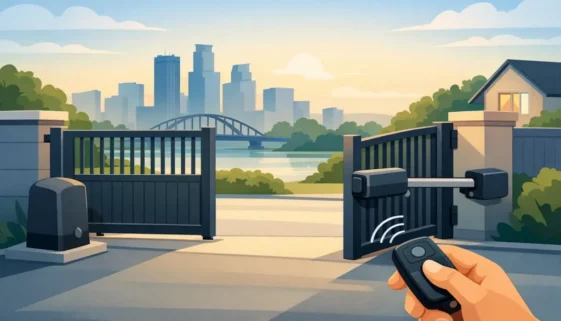
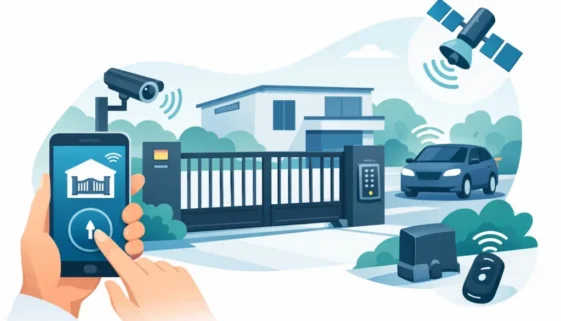
With a mobile credential, an approved user can open a designated gate or door with a smartphone. This can be useful for office staff, maintenance teams, contractors, and property managers who move between multiple sites. Access can be issued remotely, limited to certain hours, or removed when a project or employment period ends.
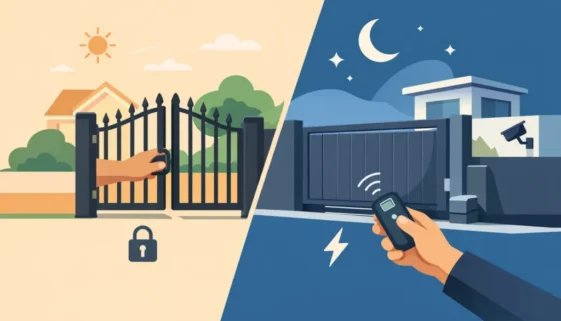
Mobile access is not right for every entrance. Some sites still benefit from a keypad, especially where temporary users or delivery personnel need a simple code. Others may prefer cards or fobs because not every employee wants to use a personal phone for workplace access. The best approach often combines credential options rather than relying on one method alone.
Cloud-Based Management Offers More Control
Cloud-managed access control is another major shift. Instead of making all changes at a single on-site panel, authorized managers can often update users, schedules, and permissions from a secure web-based platform.
For a property manager responsible for several buildings, that can reduce the time spent driving to a site to add a new credential or disable an old one. It can also provide a clearer record of access activity. If a gate is used outside expected hours, the manager has information to review rather than a guess to investigate.
However, cloud-based systems should be selected carefully. Reliable internet service, user permissions, software support, and cybersecurity practices matter. A cloud platform does not eliminate the need for a qualified installation. The gate operator, safety devices, wiring, and physical entry points still need to be designed and installed for dependable daily use.
Gate Automation Is Becoming a Security Priority
Automated gates are often associated with convenience, but their security value is just as significant. A properly designed gate can keep vehicle access limited to approved users, establish a clear entry point, and help prevent an open site from becoming an easy target.
For commercial and industrial properties, the trend is toward operators and controls that match the workload. A low-traffic office lot and a busy distribution yard should not use the same setup by default. Gate weight, opening cycles, wind exposure, vehicle volume, available space, and desired opening speed all need to be considered.
Sliding gates are a practical choice where driveway space allows and a wide opening is required. Swing gates can work well for certain entrances but need enough clear area for safe operation. Cantilever gates are often selected for commercial sites because they avoid a ground track across the driveway, which can be especially helpful where snow, ice, gravel, or frequent vehicle traffic would create maintenance concerns.
Safety equipment remains essential. Photo eyes, vehicle loops, edge sensors, emergency release options, and properly placed controls help protect people and vehicles while keeping the system functional. A gate that looks secure but operates unpredictably is not a long-term solution.
Visitor Management Moves Closer to the Perimeter
Many businesses are reducing the number of people who can walk or drive directly onto a site without being identified. That does not mean every visitor needs a complicated process. It means the entry point should match the level of control the property requires.
Video intercoms, call boxes, keypads, and designated delivery procedures allow staff to verify visitors before granting entry. On a construction site or contractor yard, this can help manage subcontractors and vendors. At a commercial office property, it can make visitor access more orderly without creating an unwelcoming first impression.
Clear signs, visible gate controls, and a well-designed entrance also matter. Access control works better when people understand where to stop, how to request entry, and which lane they should use. Good site design reduces confusion before technology has to solve it.
Perimeter Security and Access Control Work Together
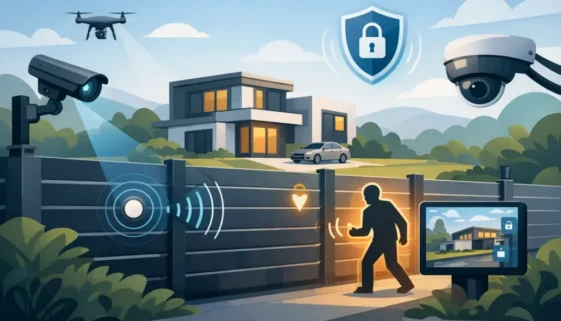
Access control cannot compensate for a weak or incomplete perimeter. If pedestrians can easily enter around a gate, or a damaged fence creates an unmonitored opening, the controlled entrance loses much of its value.
Commercial chain-link fencing remains a practical choice for many business and industrial properties because it is durable, visible, and adaptable to large perimeters. Privacy slats, windscreens, security enhancements, and matching gates can be added based on the site’s needs. Ornamental fencing may be a better fit for offices, retail centers, schools, or properties where appearance and security both matter.
The trend is not toward one fence material or one access technology. It is toward coordinated systems. A strong commercial perimeter may include fencing that defines the property line, a vehicle gate with an appropriate operator, a pedestrian access point, and a credential system that is easy for authorized users to manage.
When all of those components are planned together, the result is more reliable than adding a gate operator to an existing entrance without considering traffic flow, footing, gate condition, or power requirements.
Data, Video, and Privacy Require Balance
Access activity reports and camera integration can give businesses better visibility into what happens at the property line. Managers may be able to review when a credential was used, confirm delivery access, or investigate an after-hours entry event.
That information is useful, but it should be handled responsibly. Only authorized personnel should have access to reports, video feeds, and administrative controls. Credentials should be removed promptly when employees leave or contractors finish a job. Default passwords, broad shared codes, and outdated user lists create avoidable risks.
The goal is accountability, not unnecessary surveillance. A well-run system makes it easier to manage the property while respecting employees, tenants, and visitors.
Reliability Still Matters More Than Features
New technology gets attention, but commercial owners should not overlook the basics. A system needs dependable power, weather-appropriate equipment, durable gate hardware, clear emergency procedures, and a plan for service when something is damaged or malfunctioning.
Minnesota winters can expose weak installation choices quickly. Snow buildup, freeze-thaw cycles, wind, road salt, and heavy use can affect gates and operators. Selecting equipment based only on an initial price can lead to higher maintenance costs and more disruption later.
Before approving a project, consider the total operating picture: the number of daily cycles, the types of vehicles using the entrance, employee and visitor access needs, safety requirements, and the condition of the existing fence and gate. Those details lead to a system that supports the property instead of creating another management problem.
For Twin Cities property owners, the best next step is a site-focused conversation with a fencing and gate professional. Boulevard Fence can help evaluate the perimeter, recommend practical gate and operator options, and build an access solution designed for the way your property actually operates.