
A fence around a backyard, loading area, apartment community, or commercial entrance has to do more than look finished on installation day. It needs to handle Minnesota weather, match the level of security required, and continue supporting the property for years. When comparing aluminum vs steel fencing, the right answer depends less on which material is universally better and more on what your site needs the fence to do.
Both materials can deliver the clean, open look people often associate with ornamental fencing. Both can define a property line without blocking views, complement gates, and provide a more polished appearance than many utilitarian fence options. Their differences show up in strength, weight, maintenance expectations, and long-term application.
Aluminum vs Steel Fencing for Twin Cities Properties
Aluminum is a lightweight metal that does not rust. Steel is significantly stronger and heavier, but it requires protective coatings to prevent corrosion. That basic distinction shapes nearly every decision between the two.
For many homes, pools, gardens, and low-security perimeter applications, aluminum offers a durable, attractive solution with minimal upkeep. For commercial sites, industrial facilities, high-traffic areas, and locations where force resistance matters, steel often provides the performance margin that makes sense.
The fence design matters as much as the metal itself. Rail size, picket thickness, post depth, fastening method, gate construction, and coating quality all affect how a finished fence performs. A properly specified aluminum fence can be an excellent long-term investment. A lightly built steel fence with poor coating or inadequate installation can create avoidable maintenance issues.
Strength and Security Requirements
Steel is the stronger material. It resists bending, impact, and attempted forced entry better than aluminum, which makes it a practical choice for properties with more serious security demands. Commercial yards, equipment storage areas, industrial sites, schools, multifamily properties, and controlled-access entrances often benefit from steel ornamental fencing.
Steel also provides a stronger foundation for larger or heavier gate systems. If a property requires a wide vehicle gate, frequent gate operation, access-control equipment, or an automated operator, the gate frame and supporting posts must be designed to manage the weight and movement involved. Steel is commonly the better fit where the gate is central to daily operations.
Aluminum is not a weak material, but it is more likely to bend under a hard impact. For a residential backyard where the goal is to contain children or pets, establish a boundary, or add curb appeal, that may not be a meaningful concern. It becomes more important when the fence must deter climbing, resist abuse, or protect valuable assets.
Security also involves the overall layout. Fence height, picket spacing, rail placement, gates, latches, lighting, and controlled entry should work together. Material selection is one part of a well-planned perimeter, not the only decision.
When Aluminum Makes Sense
Aluminum is especially well suited to homeowners who want the appearance of traditional wrought-iron-style fencing without routine painting or concerns about rust. It works well around pools, along front yards, beside landscaping, and around rear yards where visibility is welcome but a clear boundary is needed.
Because it is lighter, aluminum can be easier to handle during installation and is often a practical choice for properties with sloped terrain. Rackable aluminum fence panels can follow many grade changes while maintaining a consistent picket appearance. This can reduce awkward gaps below the fence and provide a cleaner finished line on uneven Twin Cities lots.
Aluminum is also a strong option near moisture. Snow, rain, sprinkler overspray, and wet landscaping do not cause aluminum to rust. The powder-coated finish can still be scratched or damaged, but the metal itself does not develop the red corrosion commonly associated with unprotected steel.
When Steel Is the Better Choice
Choose steel when the property needs a fence that feels substantial and performs under demanding conditions. Steel ornamental fencing is a good match for commercial perimeters, facilities with valuable equipment, dumpster enclosures, active parking areas, and sites where the fence may face regular contact or attempted intrusion.
It is also worth considering steel when appearance and security need to carry equal weight. A steel fence can create a professional, high-end boundary while offering more resistance to bending and impact than aluminum. For a business entrance or multifamily community, that added durability can support both property presentation and site control.
The trade-off is weight and maintenance planning. Steel requires a quality protective finish, typically galvanizing and powder coating or another proven coating system. If the coating is compromised, especially at welds or scratches, corrosion can begin. Regular inspections help catch small issues before they become larger repairs.
Maintenance in Minnesota Weather
Minnesota’s freeze-thaw cycles, snow, road salt, and moisture put every exterior material to work. Aluminum has a clear maintenance advantage because it cannot rust. Occasional washing with mild soap and water is generally enough to remove dirt, pollen, and winter residue. Inspecting hardware, posts, and gates each season remains a good practice.
Steel requires more attention, particularly near driveways and parking areas where deicing salt can collect. A well-finished steel fence is built to withstand outdoor exposure, but its coating should be checked periodically for chips, deep scratches, or early signs of corrosion. Prompt touch-up work protects the material and preserves its appearance.
Neither option is completely maintenance-free. Gates should be adjusted as needed, latches should operate correctly, and vegetation should be kept from trapping moisture against the fence. The difference is that aluminum asks for less corrosion-related maintenance over its service life.
Appearance and Property Value
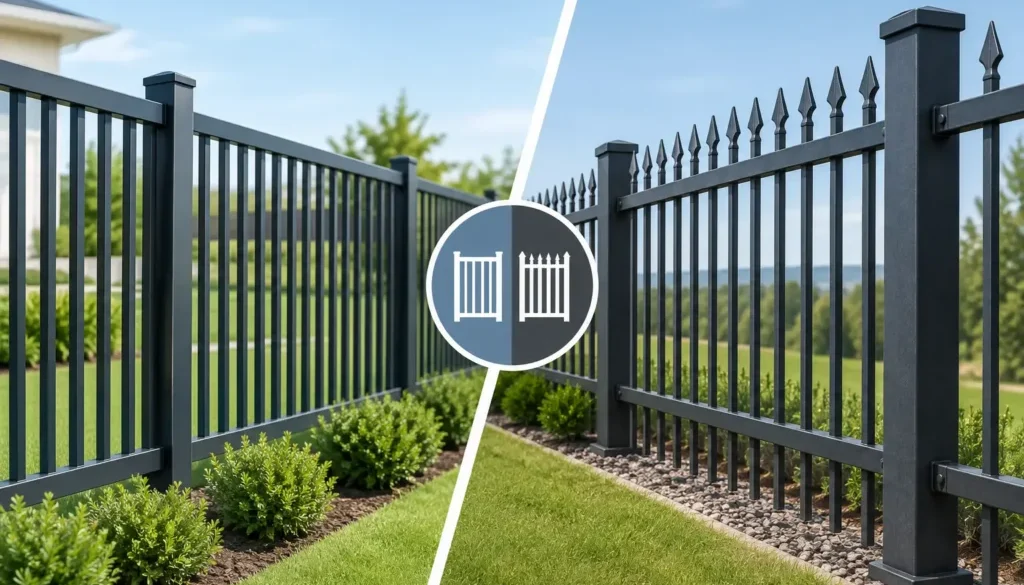
Both aluminum and steel fencing can add definition and curb appeal without creating the closed-in effect of a solid privacy fence. Black remains a popular choice because it frames landscaping and architecture without competing with either. Depending on the product line, other colors and decorative details may be available.
Aluminum typically has a refined, streamlined look that suits traditional and contemporary homes alike. It is a common choice when homeowners want a visible boundary that still keeps gardens, mature trees, or neighborhood views open. Around a pool, it can provide required separation while preserving sightlines for supervision.
Steel often delivers a heavier, more architectural appearance. Its visual weight can be an advantage at commercial properties or larger residences where a more formal perimeter is appropriate. The best choice should match the scale of the building, the surrounding landscape, and the purpose of the enclosure.
Cost: Look Beyond the Initial Price
Installed cost varies by fence height, style, terrain, gate requirements, soil conditions, demolition needs, and local code requirements. Aluminum may cost less than comparable steel in some applications because it is lighter and easier to work with. However, the gap is not always simple, especially when decorative styles, heavier posts, or complex grades are involved.
Steel can cost more upfront, but its added strength may be worth the investment for a security-focused site. Replacing a bent aluminum section after a vehicle impact or repeated abuse can be more expensive and disruptive than selecting steel for the right location from the start.
For residential properties, the long-term value of aluminum often comes from low upkeep and lasting appearance. For commercial and industrial properties, the value of steel often comes from its durability, security capability, and ability to support substantial gates and access-control systems. The best budget decision considers expected use over the next decade, not only the first invoice.
Installation Details That Affect Performance
Even the best material will underperform if the installation is not designed for the site. Posts must be set at the correct depth for local frost conditions, aligned accurately, and secured in suitable footings. Gates need properly sized posts, dependable hinges, and enough clearance to swing or slide without dragging through seasonal ground movement.
A professional fence contractor should also account for property lines, utility locations, slope, drainage, municipal requirements, and the intended use of each gate. A pedestrian gate for a backyard has very different demands than a vehicle gate at a business entrance.
Boulevard Fence helps Twin Cities property owners evaluate these details before installation, so the selected fence supports the property rather than simply filling a line on a site plan.
Choose the Fence That Matches the Job
If your priority is low maintenance, open views, pool safety, and residential curb appeal, aluminum is often the right fit. If your priority is impact resistance, controlled access, heavier gates, or a stronger commercial perimeter, steel is usually the better investment.
The most effective fence begins with a clear understanding of how the property is used every day. A thoughtful on-site evaluation can turn that understanding into a fence that looks right, operates reliably, and continues protecting the space long after the installation crew has left.


