
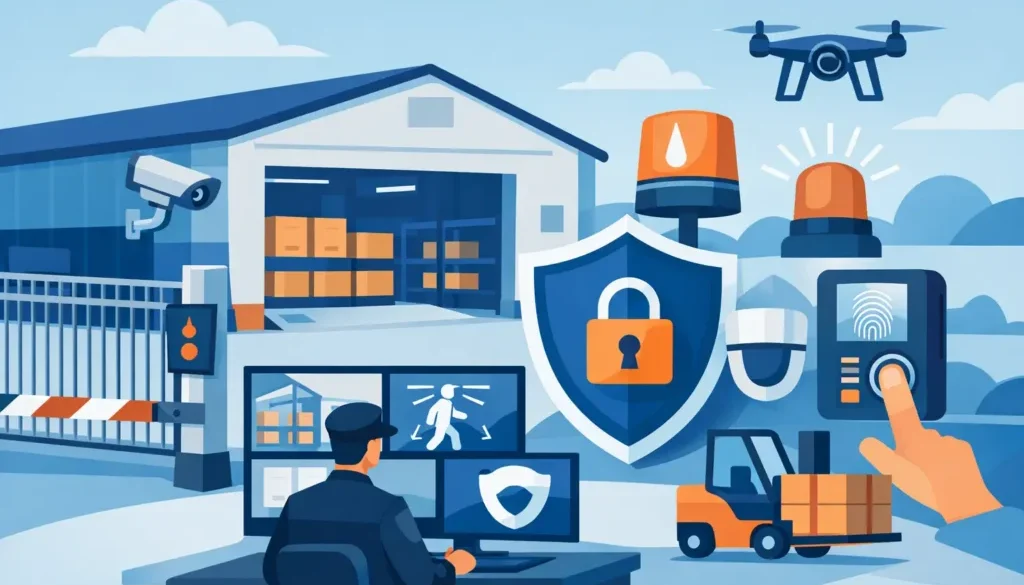
A warehouse can have strong locks on every door and still remain exposed if the property line is easy to cross. Unsecured vehicle entrances, damaged chain-link sections, open loading areas, and unclear pedestrian routes create opportunities for theft, trespassing, and costly disruption. The most effective security upgrades for warehouses begin at the perimeter, where access can be controlled before a problem reaches the building.
For Twin Cities warehouse operators and property managers, the right plan needs to account for more than crime prevention. It must hold up to heavy traffic, winter weather, delivery schedules, emergency access requirements, and the everyday demands of an active industrial site. A well-designed fence and gate system can improve security without making operations harder for employees, drivers, or visitors.
Start With the Warehouse Perimeter
A security review should begin by walking the entire property line, not just looking at the main entrance. Look for areas where an intruder could enter without being seen, where fencing is bent or corroded, or where the boundary is unclear. Pay close attention to the spaces behind the building, around dumpsters, near storage yards, and along railroad tracks or neighboring properties.
Perimeter fencing establishes a clear line between public space and private operations. It also gives managers a practical way to direct traffic toward designated entrances. For many warehouses, commercial chain-link fencing is a dependable starting point because it is durable, cost-effective, and available in heights and configurations suited to the site.
The best material depends on the security objective. Standard chain-link may be appropriate for a lower-risk boundary or employee parking area. A taller fence with privacy slats, tighter mesh, heavier posts, or barbed wire may be better for a high-value storage yard or an isolated section of the property. Ornamental fencing can be a strong option where a facility entrance needs a more polished appearance without giving up boundary control.
A fence only works as well as its weakest section. Replacing a failing gate while leaving damaged fencing along the rear lot line does not solve the full problem. A complete review helps identify whether repair, reinforcement, or a new perimeter layout will provide the better long-term value.
Security Upgrades for Warehouses Should Control Access
Most warehouse security concerns come down to one question: who can enter, and when? Gates turn that question into a manageable process. Instead of relying on signs, cones, or an unlocked drive to guide vehicles, a properly designed gate system creates a defined access point for employees, deliveries, vendors, and authorized visitors.
Sliding gates are often a practical choice for industrial properties with wide drive lanes and limited clearance for a swinging gate. Cantilever gates can keep the opening clear of a ground track, which is useful in areas where snow, ice, debris, or frequent truck traffic could interfere with operation. Swing gates may be a good fit for secondary entrances, equipment yards, or lower-volume access points where space allows.
Gate operators add another level of control. An automated system can be activated through keypads, remotes, credential readers, telephone entry systems, or other approved access methods. The right choice depends on how the warehouse operates. A facility with a consistent employee schedule may need simple credential access, while a site with frequent carriers and vendors may benefit from an entry system that lets staff verify visitors before opening the gate.
Automation is not simply a convenience feature. It reduces the likelihood that a gate will be left open after hours, helps keep drivers from entering through the wrong location, and gives the property a more consistent access routine. However, it needs to be selected and installed with safety in mind. Vehicle loops, photo eyes, warning devices, emergency release procedures, and proper operator settings all matter.
Separate Vehicle and Pedestrian Movement
Warehouses often concentrate attention on truck gates while overlooking pedestrian access. Employees, contractors, and visitors should not have to walk through an active vehicle entrance to reach the building. A separate walk gate can improve safety and make it easier to monitor who enters the site.
It also helps to establish clear routes from parking areas to the office or employee entrance. Fencing can guide foot traffic away from loading docks, trailer lanes, and equipment zones. This is not just a security measure – it supports a cleaner, safer facility layout.
Protect the Areas Beyond the Main Building
The warehouse building is only part of the asset. Outdoor inventory, trailers, return pallets, fleet vehicles, fuel areas, generators, and waste containers can all become targets when they are not properly enclosed. A secure storage yard may require its own fence line and controlled gate, even when the larger site already has perimeter fencing.
This layered approach is especially useful for facilities that cannot fully close their main entrance during business hours. The property can remain accessible to scheduled traffic while higher-value materials or equipment stay behind a second secured boundary.
Visibility matters, but it involves a trade-off. Open chain-link fencing allows staff and patrols to see activity around the perimeter. Privacy slats limit outside visibility and can discourage casual observation of stored materials. The better option depends on what is being protected, how visible the site is from public roads, and whether employees need a clear view of the surrounding property.
Lighting and cameras can strengthen a fencing and gate plan, but they should support physical security rather than replace it. A camera may record an unauthorized entry. A durable fence and locked gate can make that entry more difficult in the first place. When systems work together, staff have more time to respond and fewer blind spots to manage.
Choose Materials Built for Industrial Use
Warehouse fencing needs to withstand more than occasional contact. Forklifts, trailers, snow removal equipment, wind, salt, and repeated gate cycles can all take a toll. Selecting the least expensive material or hardware may lower the initial cost, but frequent repairs can quickly erase those savings.
Commercial-grade chain-link fencing remains a common choice because it provides strength, visibility, and serviceability. Heavier-gauge fabric, stronger framework, and properly set posts are worthwhile considerations for sites exposed to high traffic or attempted intrusion. Galvanized and coated materials can also help protect against corrosion, which is particularly relevant through Minnesota winters.
Gate hardware deserves the same attention as the fence itself. Hinges, rollers, latches, tracks, operator components, and access-control devices must be matched to the weight and frequency of use. A gate that is undersized for regular truck traffic will become a maintenance issue and may create delays at the entrance.
Professional layout and installation are equally important. Grade changes, drainage, gate travel distance, utility locations, snow storage, and fire department access all affect how the finished system performs. The strongest fence materials cannot compensate for poor placement or an entrance that does not fit the way a facility actually operates.
Know When an Upgrade Is Due
Some warehouse security weaknesses are obvious, such as a broken gate or a hole in the fence. Others develop slowly. Gates that no longer latch correctly, sagging sections, repeated unauthorized parking, drivers bypassing a closed entrance, and frequent after-hours activity are all signs that the current setup may no longer fit the property.
Expansion is another common trigger. Adding outdoor storage, changing tenant use, increasing delivery volume, or reconfiguring parking can create new access points and blind areas. Security should be reviewed whenever the site changes, not only after an incident.
A practical project plan prioritizes the areas with the greatest risk first. For one property, that may mean replacing an aging vehicle gate. For another, it may mean extending fencing around a storage yard, adding a controlled pedestrian entrance, or rebuilding an entire perimeter to match current operations. The goal is not to add security features everywhere. It is to create reliable barriers and access points where they will make the greatest difference.
Boulevard Fence helps commercial and industrial property owners throughout the Twin Cities evaluate fencing, gates, and gate operators that fit their site conditions and security goals. A clear on-site plan can prevent expensive revisions later and give facility managers confidence that daily access will remain efficient.
A warehouse perimeter should make the right path easy for authorized people and difficult for everyone else. When fencing, gates, and access control are planned around the way the property works, security becomes part of the operation rather than an obstacle to it.


