A fence can add privacy, security, and a finished look to a property, but it cannot block rights that belong to someone else. Fence easement rules come into play when a utility company, municipality, neighbor, or shared-access user has a legal right to use part of your land. Building first and asking questions later can lead to an expensive relocation, a removed fence section, or trouble when it is time to sell the property.
For Twin Cities homeowners, property managers, and business owners, the practical question is not simply, “Do I own this ground?” It is, “What recorded or required access applies to this area, and can a fence be placed there without creating a problem?” The answer depends on the easement language, local requirements, fence design, and the party with easement rights.
What Is a Fence Easement?
An easement is a legal right to use a defined portion of another person’s property for a specific purpose. The property owner still owns the land, but that ownership is subject to the easement holder’s rights. Easements commonly appear along rear or side lot lines, near utility equipment, across shared driveways, and around drainage areas.
A fence does not automatically violate an easement. In many cases, a fence may be allowed within the easement area. The concern is whether it interferes with the purpose of the easement or prevents the easement holder from getting needed access.
For example, a utility easement may allow a gas, electric, cable, water, or sewer provider to inspect, repair, replace, or install lines. A solid fence placed directly over a line might be permitted at installation, yet it may need to be removed later if crews require access. A commercial site with a drainage easement faces a different issue: fencing cannot obstruct water flow, maintenance access, or stormwater infrastructure.
The Fence Easement Rules That Affect Placement
The recorded easement document is the starting point. It identifies who holds the easement, where it applies, and the rights granted. A title commitment, property survey, plat, deed, or county land record may show its location. Do not rely only on an old fence, landscaping edge, or a neighbor’s description of where the boundary lies.
Utility easements
Utility easements are among the most common reasons to pause a fence layout. They often run along property lines, but not always. A utility provider may have the right to enter the easement with equipment, dig within the area, and remove obstacles necessary to perform work.
A fence placed in a utility easement can create a trade-off. It may provide the enclosure you want now, but it may also be damaged or removed during future utility work. The utility company generally is not responsible for restoring private fencing when access is necessary under its recorded rights. A removable panel or properly located gate can sometimes make access easier, but it does not override the easement terms.
Before installation, identify utility lines through the required locate process and discuss the planned fence line with the relevant utility provider when an easement is involved. Locating underground lines is essential for safe digging, but a utility locate alone does not tell you whether a fence is legally allowed in an easement.
Drainage and stormwater easements
Drainage easements protect a system designed to move or store water. This may include swales, pipes, ponds, catch basins, ditches, or underground stormwater facilities. In the Twin Cities, drainage conditions can be especially important on newer developments, commercial properties, and lots with managed stormwater systems.
The wrong fence location can restrict maintenance access or change how water moves across the site. Even a small gap at the bottom of a fence, a different style of panel, or a setback from a drainage feature may matter. These projects should be reviewed carefully before posts are set, particularly if the property is part of an association or subject to municipal stormwater requirements.
Access and shared-driveway easements
An access easement allows people, vehicles, or service providers to pass through an area. It may serve a shared driveway, rear garage access, parking area, private road, or neighboring parcel. A gate across that access point can be a major issue if it slows or prevents the people entitled to use it.
That does not mean gates are off the table. It means the gate design, location, operating method, and access permissions need to match the easement’s purpose. On commercial and industrial sites, this may require coordination with tenants, delivery services, emergency access requirements, and gate operator controls.
Property Lines and Easements Are Not the Same Thing
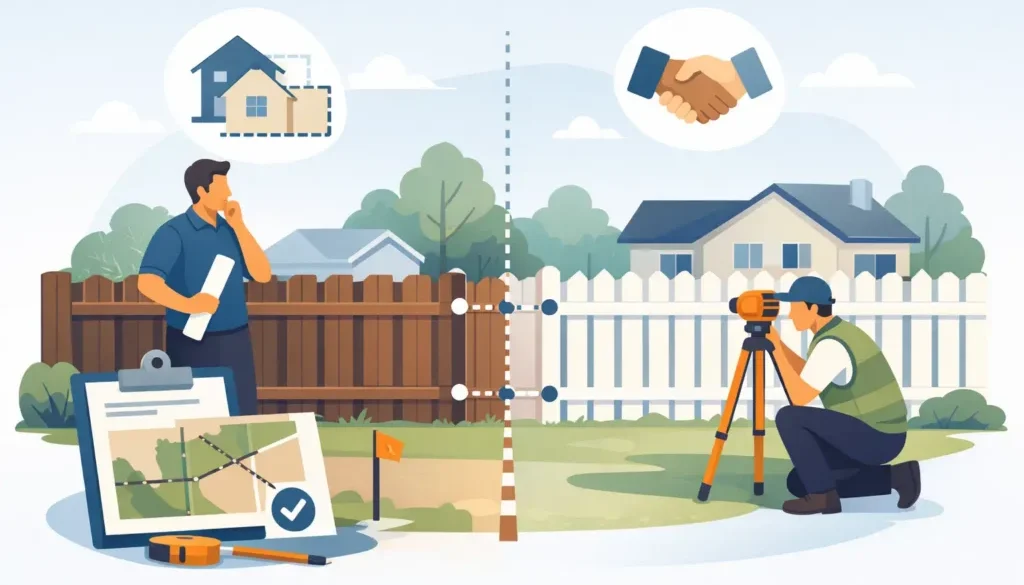
A fence should normally be installed on the owner’s side of the true property line unless there is a written agreement for a shared boundary fence. An easement may overlap that boundary, sit inside it, or cross the property at an angle. These are separate questions, and confusing them is one of the most common causes of fence disputes.
A professional survey is the clearest way to establish property boundaries. It is especially worthwhile when a proposed fence will sit close to a lot line, when neighboring improvements conflict with the apparent boundary, or when the project involves a large investment such as ornamental fencing, security fencing, or an automated gate.
A survey also helps prevent a different problem: unintentionally placing your fence on a neighbor’s property. Even a few inches can create a dispute and may complicate future property transactions. For older neighborhoods where pins are difficult to locate or lot lines have been assumed for decades, the survey is often the best money spent before construction begins.
Local Fence Rules Still Apply
Easement approval does not replace local fence regulations. Minneapolis, St. Paul, and surrounding Twin Cities communities may have their own standards for fence height, setback, material, visibility near corners, permits, and pool barriers. Homeowners associations can also impose design, color, height, or approval requirements beyond city rules.
A project can meet a city’s height limit and still interfere with an easement. It can also be clear of an easement and still violate a local setback or corner-visibility rule. Treat each review as part of the same planning process rather than assuming one approval covers everything.
This is particularly relevant for commercial and industrial properties. Security fencing, access gates, and gate operators may involve fire department access, emergency egress, vehicle circulation, and site-plan requirements. The right solution must protect the property without restricting the people and services that must be able to enter it.
A Practical Process Before Fence Installation
Start by gathering the documents you already have, including your survey, plat, title paperwork, and association documents. Look for labeled easements, then confirm the proposed fence route against those records. If no current survey exists and the fence is near a line or easement, consider obtaining one before finalizing the layout.
Next, check municipal requirements and association standards that apply to the property. If an easement holder must approve the work, get that approval in writing. A conversation can be helpful, but it is not the same as documentation when questions arise later.
Then plan the fence around the realities of the site. A slight adjustment to a fence line may preserve access and avoid future removal. In other situations, a gate, removable section, wider opening, or different fence style may be the practical answer. There is no single solution because the language in the easement and the site conditions control the decision.
Finally, have underground utilities located before digging. Fence posts, gate posts, and operator foundations all require excavation. A careful layout protects workers, property, and utility infrastructure while reducing surprises once installation is underway.
When to Ask for Professional Guidance
Some projects are straightforward. Others deserve an added level of review, especially when a property has a utility cabinet, drainage feature, shared drive, unclear boundary, commercial access point, or proposed automated gate. A fencing contractor can help evaluate constructability and recommend a layout that supports security, privacy, curb appeal, and access needs. Questions about legal interpretation, ownership rights, or disputed boundaries should go to a qualified surveyor or real estate attorney.
The best fence projects begin with a clear line on paper and a practical plan on the ground. Before committing to a layout, take the time to confirm easements, boundaries, and access needs. Boulevard Fence can help Twin Cities property owners plan a durable, well-placed fence that is built for the property, not against its restrictions.


