
A backyard next to a busy Twin Cities street can feel very different after the right fence is installed. But can a fence reduce noise enough to make outdoor living more comfortable? Yes, a properly designed solid fence can reduce the amount of sound reaching your property. The results depend on the noise source, fence construction, site layout, and whether the fence is designed for sound control rather than simply privacy.
A fence will not make traffic, nearby businesses, trains, or loud neighbors disappear. It can, however, interrupt the direct path sound takes from its source to your yard, patio, building entrance, or outdoor work area. For many homeowners and property managers, that reduction is enough to make the space more usable and more private.
How a Fence Can Reduce Noise
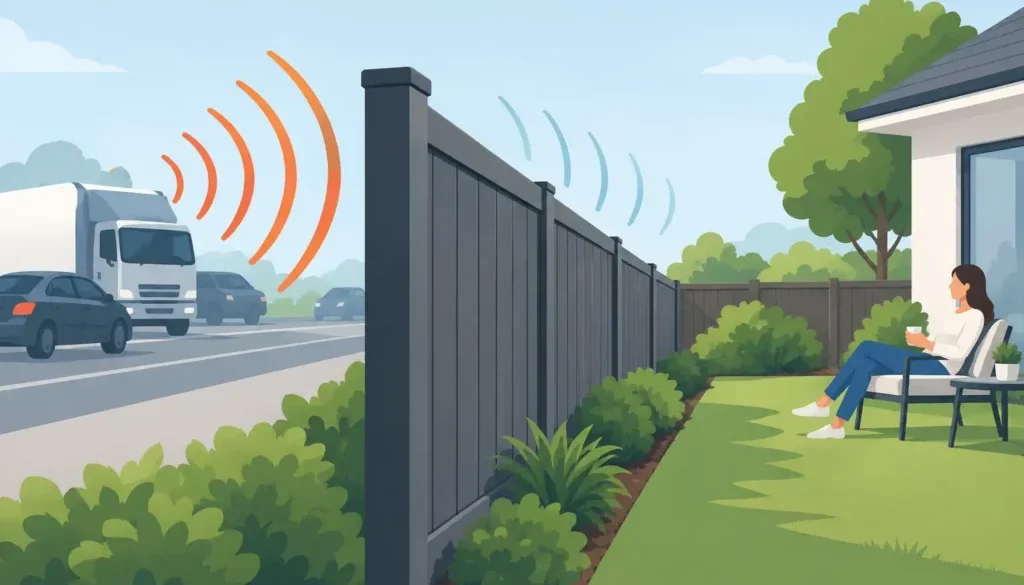
Sound travels in waves, and those waves will travel directly from a road, parking lot, or neighboring property until something blocks or redirects them. A fence becomes more effective when it is tall, dense, continuous, and positioned between the noise source and the area you want to protect.
The key is stopping gaps. Sound can move through openings between fence boards, under the bottom rail, around gate edges, and through open chain-link mesh. A fence that looks private from a distance may still offer limited noise reduction if it has even small openings along its length.
A solid fence does two useful things: it blocks a portion of the direct sound path and reflects some sound back toward its source. This works best when the fence breaks the line of sight between the source and the listener. If you can see a passing vehicle from a seating area, the traffic noise has a relatively clear path as well.
Which Fence Materials Work Best for Noise Reduction?
For sound control, density matters more than decorative style. The best fence is typically one with a solid, gap-free surface and enough mass to resist vibration.
Wood privacy fencing
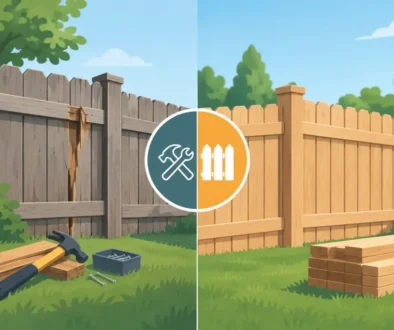
Wood is a practical choice for many residential properties because it can be built as a solid privacy fence with tightly fitted boards. A well-constructed wood fence provides more sound control than an open picket or spaced-board design, while also adding warmth and visual privacy.
The construction details matter. Boards should overlap or fit tightly, the bottom should sit close to the ground, and posts and rails should support the fence securely. As wood ages, regular maintenance helps prevent warping, loose boards, and gaps that can reduce performance.
Vinyl privacy fencing
Vinyl privacy fencing creates a clean, solid barrier with minimal ongoing maintenance. Quality privacy panels can be effective for moderate traffic noise and nearby activity, especially when installed without gaps between sections or at the base.
Vinyl is often a strong fit for homeowners who want a uniform appearance and durable privacy. It is not necessarily heavier than every wood option, so the specific fence system and installation method should guide the recommendation.
Ornamental and chain-link fencing
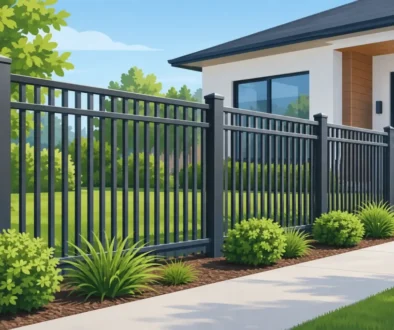
Ornamental aluminum and traditional chain-link fencing are excellent options for security, visibility, and boundary definition. On their own, they are not effective noise barriers because sound passes through their open construction.
In some commercial or industrial applications, privacy slats or specialized barrier materials may improve the performance of chain-link fencing. Still, a solid barrier is generally the better choice when noise reduction is the primary goal.
Height Makes a Major Difference
A taller fence can block more sound because it interrupts more of the direct path between the source and your property. This is why a 6-foot solid privacy fence often performs better than a shorter decorative fence near a busy road.
Height is not unlimited, though. Local zoning rules, neighborhood requirements, utility easements, and sightline standards may limit the height or placement of a fence. Corner lots and commercial entrances may have additional visibility considerations. Before planning a tall sound-control fence, confirm what is permitted for your property.
The fence must also be structurally designed for its height, material, and exposure to wind. Twin Cities weather puts fencing through snow, freeze-thaw cycles, rain, and strong winds. A taller solid fence catches more wind than an open design, making professional installation and properly set posts especially important for long-term durability.
Installation Details That Affect Results
A quality noise-reduction fence is only as effective as its weakest opening. Small construction choices can create a noticeable difference.
First, keep the bottom of the fence close to the ground. An open gap underneath allows sound to pass directly into the yard. On uneven terrain, the fence may need to follow the grade carefully or use a thoughtful stepped design with the lowest practical clearance.
Second, use solid gates and minimize gaps around them. A wide double gate can be necessary for equipment access, but it can also become a weak point if it is not properly fitted. For commercial properties, a gate plan should balance access control, daily operations, and perimeter coverage.
Third, extend the fence far enough to cover the area you use. A short fence section beside a patio may block some direct noise, but sound will still travel around both ends. Extending the barrier along the affected side of the property often produces a more meaningful improvement.
Finally, placement matters. A fence located closer to the noise source or closer to the area being protected can be helpful, depending on the property layout. Driveways, retaining walls, slopes, existing trees, utility locations, and access needs all affect the best design.
What Results Should You Expect?
A fence is most effective against tire noise, conversations, barking, activity from a nearby yard, and other sounds that travel close to ground level. It is less effective against noise coming from elevated sources, such as aircraft, upper-story equipment, or loud exhaust systems with a clear path over the fence.
Low-frequency sound is also more difficult to control. The deep rumble from heavy trucks, machinery, or bass may still be noticeable even behind a well-built fence. In those situations, a fence can improve comfort, but it should be viewed as one part of a broader property plan rather than a complete solution.
Landscaping can complement a fence, but shrubs and trees alone usually do not provide substantial sound reduction unless they form a very large, dense planting area. Their real value is often visual screening and creating a calmer setting. Combined with a solid fence, landscaping can make traffic feel less intrusive even when some sound remains.
When a Sound-Control Fence Is Worth It
A solid fence is often a worthwhile investment when a property borders a collector road, school pickup route, parking lot, active neighbor, commercial site, or shared outdoor area. It can make a backyard more comfortable for family time, improve privacy around a patio, and create a more professional perimeter for a business or multifamily property.
For commercial and industrial locations, the right fencing approach may also support security, access control, and site appearance. A solid perimeter section can screen equipment or loading activity while helping reduce the everyday sound that reaches adjacent properties. The best choice depends on whether privacy, security, durability, or noise control is the leading priority.
A fence cannot turn a high-traffic location into a silent one. It can make the difference between a yard you avoid and a yard you enjoy. A site-specific consultation with an experienced local contractor, such as Boulevard Fence, can help determine the right material, height, placement, and construction details for a quieter, more useful property.