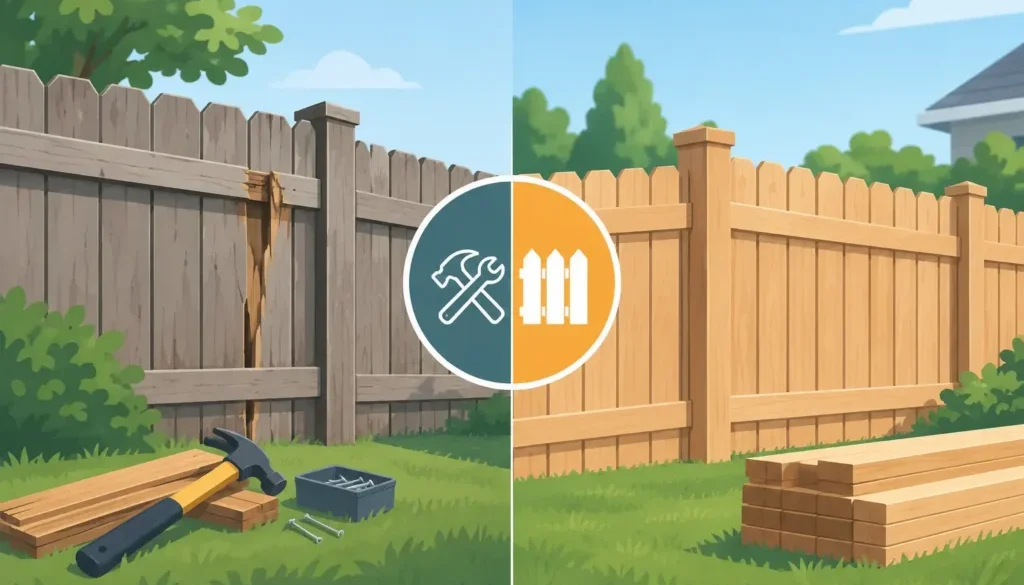
A leaning fence after a Twin Cities storm is not always a lost cause. Sometimes, a new post and a section of matching material can restore its strength and appearance. Other times, that visible problem is only the latest sign of widespread decay, failing footings, or an outdated layout. The right choice in the fence replacement vs repair decision protects your property, controls costs, and prevents you from putting money into a fence that is nearing the end of its useful life.
A professional assessment should look beyond the broken board, bent rail, or sagging gate. The condition of the entire fence, the material, the purpose of the enclosure, and the demands of Minnesota weather all affect whether repair or replacement offers better long-term value.
When Fence Repair Makes Sense
Repair is often the practical choice when damage is isolated and the rest of the fence remains structurally sound. A single damaged wood panel, a few loose chain-link ties, or a gate that needs adjustment does not automatically call for a full replacement.
For wood fencing, localized repairs can work well when the posts are stable, the rails are solid, and rot has not spread beyond a small area. Replacing several pickets, reinforcing a rail, or resetting one post can bring back privacy and improve curb appeal without disturbing the entire yard.
Vinyl fencing is also a good repair candidate when a panel or individual component has been damaged by impact. Vinyl does not rot, but it can crack in severe cold or under force. If the surrounding posts, rails, and panels are in good condition, replacing the affected component is typically efficient and cost-effective.
Chain-link fences are especially repairable. Bent fabric, damaged tension bars, loose fittings, and minor gate problems can often be corrected without replacing long runs of fencing. This is valuable for commercial and industrial properties where the perimeter is otherwise secure and downtime needs to stay minimal.
Ornamental metal fencing can frequently be repaired when damage is limited to a section, fastener, or gate component. Surface corrosion may be manageable if it is caught early, though advanced rust around welds, posts, or structural connections deserves closer attention.
Repair is usually the stronger option when these conditions are true:
- Damage is limited to a small, defined section of the fence.
- Most posts remain plumb, secure, and free from deterioration.
- The fence still meets your privacy, security, and access needs.
- Replacement materials can reasonably match the existing fence.
- Repair costs are substantially lower than replacing a large portion of the system.
The goal is not simply to make the fence look better for a season. A proper repair should restore dependable performance and fit naturally with the existing installation.
Signs Fence Replacement Is the Better Investment
Replacement becomes the smarter decision when repairs are repetitive, structural problems are widespread, or the fence no longer serves the property as it should. A fence can appear acceptable from a distance while hiding issues that will continue to cause maintenance costs and safety concerns.
Wood fences often reach this point when multiple posts are rotting at ground level, rails are soft or split, and boards are warping across several sections. Replacing a few pieces may temporarily improve appearance, but it will not correct a system that is failing from the foundation up. In these cases, installing a new fence provides a clean, consistent result and avoids repeated service calls.
For chain-link fencing, replacement may be necessary when rust is widespread, the fabric has been stretched or cut in many areas, or posts have shifted enough to weaken the perimeter. On commercial and industrial sites, a compromised fence can affect site control, equipment protection, and liability. A new installation can also be designed around current security needs, including stronger materials, improved gate access, and automated entry systems.
Vinyl and ornamental fences may require replacement when multiple panels are cracked, posts are unstable, or replacement parts are no longer available in a compatible style or color. An obvious mismatch can hurt the appearance of a residential property or a business entrance. If several sections need attention, a coordinated replacement may be more economical than piecing together aging materials.
Replacement is also worth considering when your needs have changed. A homeowner may want more privacy for a backyard, a safer enclosure for children or pets, or a design that better complements a remodel. A property manager may need to control access to a parking area. An industrial operator may need a more durable perimeter and gate system. Repairing an old fence cannot always deliver those improvements.
Compare the Cost Beyond Today’s Invoice
The least expensive immediate option is not always the least expensive ownership decision. A repair can be an excellent value when it adds years of reliable service. It becomes poor value when it only postpones replacement for a short time.
Consider the pattern of maintenance. If you have repaired storm damage once in an otherwise healthy fence, another repair may make sense. If you are replacing posts every year, patching recurring rot, or dealing with a gate that no longer aligns because the fence line is shifting, the cumulative cost can quickly approach the cost of a new installation.
Material matching matters as well. New wood ages differently than existing boards. Vinyl colors can vary by product line and exposure to sunlight. Older ornamental fencing may use components that are no longer readily available. A repair that functions properly but stands out visually may not meet the expectations of a front yard, business frontage, or managed community.
A replacement project also creates an opportunity to address installation details that may have contributed to the problem. Proper post placement, reliable gate hardware, appropriate material selection, and a layout designed for the property all improve long-term performance.
How Twin Cities Weather Changes the Decision
Minneapolis, St. Paul, and the surrounding area put fences through demanding conditions. Freeze-thaw cycles can shift soil around posts. Heavy snow can press against lower fence sections. Windstorms can loosen panels and push compromised fences out of alignment. Moisture at the base of wood posts can lead to decay long before it is obvious from the yard.
These conditions do not mean every weather-related problem requires a new fence. They do mean that a repair should account for why the damage occurred. Resetting a leaning post without addressing a failing footing or decayed material may provide only a short-term fix.
For properties with drainage issues, low areas, or exposure to strong winds, replacement may allow for a better material and design choice. Vinyl, chain-link, ornamental fencing, and properly built wood fencing each offer different advantages depending on whether privacy, visibility, security, or appearance is the priority.
Evaluate Posts, Gates, and the Fence Line First
The most useful question is not, “How many boards are damaged?” It is, “Is the structure supporting those boards still reliable?” Posts carry the fence. When several posts are loose, leaning, cracked, rotted, or rusted through, cosmetic repairs are unlikely to last.
Gates deserve the same attention. A dragging or sagging gate may only need hardware adjustment, but it can also signal shifting posts or an undersized gate system. For commercial properties, gate problems can interrupt operations and weaken access control. If a gate is central to how the property functions, upgrading it during a replacement project can be a practical decision rather than an added expense.
Walk the full fence line and look for uneven sections, soil movement, gaps beneath the fence, repeated patchwork, and changes in material condition. A fence that has one damaged area and a solid structure is different from a fence with trouble appearing in several places.
Choose a Solution That Fits the Property
A repair should preserve a fence that still does its job. Replacement should solve a larger problem, whether that means restoring security, improving privacy, updating curb appeal, or adding dependable access control.
For residential properties, the decision often comes down to the condition of the structure and the desired look of the yard. For commercial and industrial properties, security, durability, perimeter control, and gate performance may carry more weight. In either case, material selection should reflect the property’s use rather than simply match what was installed years ago.
Boulevard Fence helps Twin Cities property owners assess the condition of existing fencing and choose a practical path forward. Whether the right answer is a focused repair or a complete new installation, quality workmanship and clear recommendations make the decision easier.
A fence should provide confidence every time you look at it, close the gate, or secure the property for the night. If recurring repairs are taking that confidence away, it may be time to invest in a solution built for the years ahead.