
A fence can look great the day it is installed and still fail early if its posts are sitting in saturated ground. Across the Twin Cities, spring thaw, heavy rain, clay soil, and low-lying yards can all keep the ground wet longer than property owners expect. Choosing the right fence materials for wet soil is part of the answer, but long-term performance also depends on proper drainage, post depth, and installation methods built for Minnesota conditions.
For a backyard privacy fence, a commercial perimeter, or a controlled-access entry, the goal is the same: build a fence that stays straight, secure, and attractive through changing seasons.
Why Wet Soil Is Hard on Fences
Wet ground affects more than the portion of a fence post below grade. When soil holds excess moisture, wood can decay, unprotected steel can corrode, and shifting ground can move posts out of alignment. Minnesota’s freeze-thaw cycles add another concern. Water in the soil expands as it freezes, which can lift posts and disturb sections that were level when installed.
Poor drainage often creates the most visible problems. A fence that follows the bottom of a slope or crosses a persistently damp area may develop leaning posts, loose panels, sagging gates, or uneven spacing. The fence material matters, but a quality installation starts with understanding where water collects and how the site behaves throughout the year.
Best Fence Materials for Wet Soil
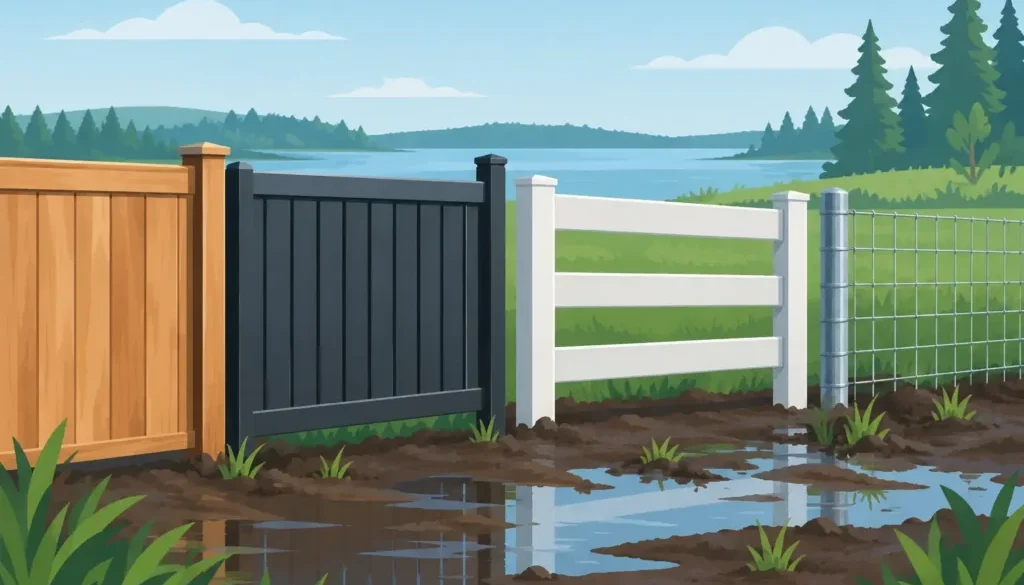
There is no single right material for every wet property. The best choice depends on the level of moisture, the purpose of the fence, maintenance expectations, and the appearance you want. These options consistently perform well when they are installed with the right foundation and hardware.
Vinyl fencing for low-maintenance privacy
Vinyl fencing is a strong choice for homeowners who want privacy without the risk of rot. Unlike wood, vinyl does not absorb moisture, splinter, or need regular staining. It provides a clean, finished look for yards where damp soil is a recurring concern.
That does not mean vinyl is maintenance-free at the ground level. Vinyl posts still need stable support, and water around the post holes can contribute to movement if drainage and footing work are overlooked. In areas with severe frost movement, the post installation method needs to account for local soil conditions so panels remain level and secure.
Vinyl works especially well for residential privacy fencing, pool enclosures, and property boundaries where a consistent appearance and easy upkeep are priorities. It may not be the best fit for every high-security commercial application or heavily impacted industrial area, where a metal system can be better suited.
Galvanized chain-link for drainage and durability
Galvanized chain-link is one of the most practical fence materials for wet soil, particularly when security, visibility, and budget are key factors. The open mesh allows water and wind to pass through rather than pressing against a solid fence surface. That can reduce stress on the structure in exposed or poorly drained locations.
A quality galvanized finish helps protect the steel from corrosion. Vinyl-coated chain-link can add another layer of weather resistance while offering color options that blend more naturally into residential landscapes, commercial sites, and recreation areas.
Chain-link is a reliable choice for commercial yards, equipment areas, dog runs, athletic spaces, and industrial perimeters. For homeowners, privacy slats can improve screening, though they also increase wind load and should be considered carefully on a wet, unstable site.
Ornamental steel for secure, polished boundaries
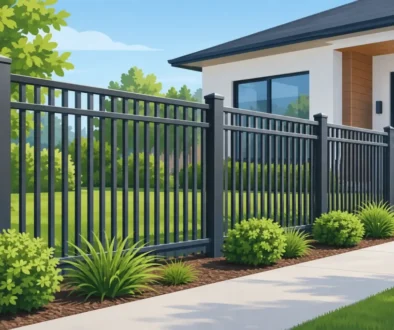
Ornamental steel fencing delivers a more refined look than chain-link while offering excellent strength for residential and commercial properties. Its open design helps it perform well where moisture and wind are concerns, and a quality protective coating is essential for long-term corrosion resistance.
This material is often chosen for front-yard boundaries, apartment communities, business entrances, and locations where curb appeal needs to work alongside security. Because ornamental fencing is rigid, accurate post placement is especially important. If wet ground causes a post to shift, the alignment of an entire section can be affected.
For gate openings, ornamental steel systems require carefully engineered gate posts and dependable hardware. A gate is the most active part of many fence systems, and saturated soil can expose weak installation practices quickly.
Pressure-treated wood for a traditional look
Wood fencing remains a popular option for privacy, natural appearance, and design flexibility. In wet soil, however, wood requires more careful material selection and ongoing maintenance than vinyl or metal.
Pressure-treated posts are designed to resist decay better than untreated lumber, but treatment does not make wood invulnerable. Standing water, soil contact, and poor drainage can still shorten its service life. Fence boards should be kept above grade where possible, and posts should be installed with a drainage-conscious approach that does not trap water around the wood.
A wood fence can be an excellent choice when the site drains reasonably well and the owner is prepared to maintain it with appropriate sealing or staining. For a yard that stays soggy through spring or has a known drainage issue, vinyl, chain-link, or ornamental steel may offer better long-term value.
The Installation Details Matter as Much as the Material
Selecting a moisture-resistant fence is only half the decision. A well-built fence needs posts that are properly set for the soil, climate, fence height, and wind exposure. This is particularly true in the Twin Cities, where frozen ground and spring saturation can work against shallow or poorly supported installations.
First, the fence layout should avoid unnecessary low spots whenever possible. A small adjustment in the fence line may keep posts out of the wettest section of the yard. Where the fence must cross a damp area, the installer can evaluate post spacing, depth, drainage aggregate, and appropriate footing methods for the conditions.
Second, water needs a way to move away from the fence. Grading improvements, swales, downspout extensions, or drainage solutions may be worth addressing before installation. A fence contractor can identify how the layout interacts with the problem area, but major drainage concerns may also call for coordination with a landscaping or drainage professional.
Finally, use compatible hardware. Galvanized or coated fasteners, brackets, hinges, and gate components help prevent premature corrosion. On a wood fence, ordinary fasteners can stain the material and fail long before the fence itself should need replacement.
Avoid These Common Mistakes in Wet Areas
The most common mistake is treating a drainage problem as a fence-material problem. Replacing wood with vinyl will not correct posts that are moving because runoff is pooling around them. Likewise, a galvanized chain-link fence can still lean if its terminal posts and gate posts are not properly supported.
Another issue is installing the fence too close to the ground. Bottom rails and wood boards that stay in contact with wet soil are more likely to deteriorate or collect debris. Leaving appropriate clearance helps with drainage, mowing, and seasonal movement.
Property owners should also give extra attention to gates. A gate that crosses a wet low spot may drag, sag, or become difficult to latch as the ground shifts. Placing the gate on firmer ground, using properly sized posts, and selecting a gate system suited to the opening can prevent expensive frustration later.
Choosing the Right Fence for Your Property
For a damp residential yard that needs privacy, vinyl is often the strongest low-maintenance option, while properly installed pressure-treated wood may suit a traditional design and a manageable moisture level. For commercial security, chain-link provides dependable performance and cost-effective coverage. Ornamental steel is a smart fit when a property needs both a professional appearance and a durable perimeter.
The right recommendation should account for the actual site, not just the material sample. Soil type, drainage patterns, slope, fence height, gate locations, privacy needs, and intended use all shape the best solution.
Before committing to a fence, have the wet areas evaluated while the project is still on paper. Boulevard Fence can help Twin Cities property owners match the right material and installation approach to the conditions on their site, protecting the investment from the ground up.